Celilo Falls
For at least 11,000 years, Native peoples fished and traded at this horseshoe-shaped cataract on the Columbia River — one of the most productive salmon…
Category
First Peoples’ homelands, villages, and sacred places.
For at least 11,000 years, Native peoples fished and traded at this horseshoe-shaped cataract on the Columbia River — one of the most productive salmon…
Located in Suquamish on the Kitsap Peninsula, this sacred site honors Chief Seattle (1786-1866), the Suquamish and Duwamish leader for whom Seattle was named.
A significant cultural landscape representing over 10,000 years of Suquamish tribal heritage and the intersection of indigenous history with Pacific…
One of the largest and best-preserved buffalo jumps in North America, this site saw its documented main use by Plains Indian tribes from roughly 900 to 1500 CE.
Archaeological site where the roughly 8,500-year-old Kennewick Man was discovered, sparking major debates about early American prehistory
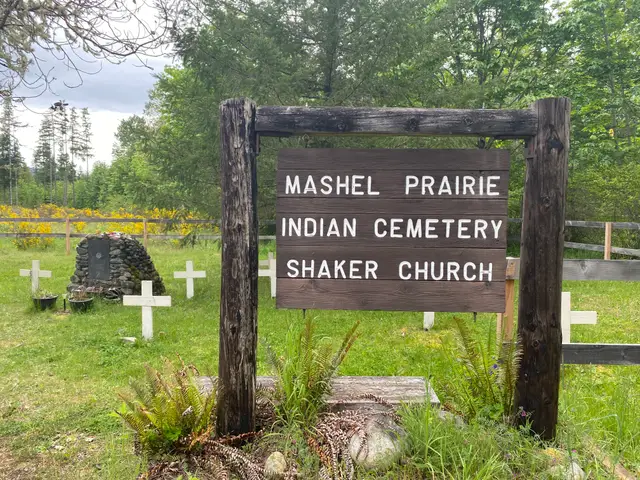
A historically significant 100-acre prairie that served as the easternmost meadow in the Nisqually River watershed and became the site of tragic conflict…
Opened in 1993 and owned and operated by the Confederated Tribes of Warm Springs, this tribal museum — Oregon's first — preserves the heritage of the Wasco,…
Preserving the history and culture of the Nez Perce people, this park encompasses 38 sites across four states.
At Point No Point (Hahdskus), on the northern tip of the Kitsap Peninsula near Hansville, Washington Territorial Governor Isaac Stevens concluded the Treaty…
Sacred grounds of the Suquamish Tribe, the original inhabitants of this land for thousands of years.
Located in Pendleton, Oregon, this world-class museum tells the story of the Confederated Tribes of Umatilla Indian Reservation through 10,000 years of history.
Located in Toppenish, this 12,000-square-foot museum preserves and interprets the history and culture of the Yakama Nation's various tribes.
Keep looking
Gorges, peaks, caves, and coastlines shaped over millennia.
Theaters, markets, gathering places, and living traditions.
Boomtowns, ghost towns, and communities that endured.
Forts, batteries, and battlefields guarding the Northwest.
Mills, mines, dams, and farms that built the region.
Airfields, railways, and the routes that connected the West.
Monuments, towers, and places of remembrance.
Lighthouses, ferries, shipyards, and the working waterfront.