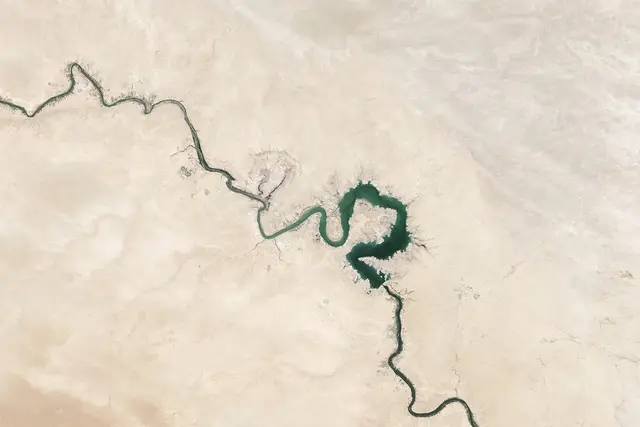
Standing along the Columbia River where one of North America’s most significant archaeological discoveries was made, you’re at the site that fundamentally changed our understanding of early human migration and settlement in the Americas. The 1996 discovery of “Kennewick Man”, a skeleton about 8,500 years old, sparked intense scientific, legal, and cultural debates that continue to influence archaeology, Native American rights, and our understanding of ancient America.
The Discovery
On July 28, 1996, college students Will Thomas and Dave Deacy were watching hydroplane races on the Columbia River when they discovered a human skull in the shallow water near Kennewick’s Columbia Park. What initially appeared to be a modern drowning victim quickly revealed itself as something far more extraordinary when forensic anthropologist James Chatters examined the remains.
The skeleton’s unusual characteristics, including what appeared to be a stone spear point embedded in the pelvis (the ilium), suggested great antiquity. Radiocarbon dating soon confirmed that the remains were about 8,500 years old, making them among the oldest and most complete early American skeletons ever discovered.
Scientific Significance
The Kennewick Man skeleton, officially designated as the Ancient One by local tribes, provided unprecedented insights into early American populations. The remains were remarkably well-preserved, allowing scientists to study not only physical characteristics but also evidence of injuries, diet, and lifestyle that painted a detailed picture of Paleoindian life.
Analysis revealed that this individual had lived a physically demanding life, with evidence of injuries from hunting and daily activities. The embedded spear point suggested he had survived a significant wound, while wear patterns on bones indicated a lifetime of strenuous physical activity typical of hunter-gatherer societies.
Legal and Cultural Battles
The discovery triggered one of the most contentious legal battles in American archaeology. Under the Native American Graves Protection and Repatriation Act (NAGPRA), local tribes, including the Umatilla, Yakama, Nez Perce, and Colville, claimed the remains as their ancestor and demanded immediate reburial without scientific study.
Scientists argued that the remains’ age and characteristics were too important to science to be reburied without thorough study. The resulting lawsuit, Bonnichsen v. United States, lasted nearly a decade and fundamentally challenged how America balances scientific research with Native American religious and cultural rights.
Challenging Assumptions
The scientific study of Kennewick Man revealed physical characteristics that didn’t match expectations about early American populations. Some researchers suggested the skeleton showed greater similarity to Pacific Islander or European populations than to modern Native Americans, challenging prevailing theories about early American migration patterns.
These findings sparked heated debates about the peopling of the Americas. While some scientists proposed multiple waves of migration from different source populations, others argued that the differences reflected normal human variation within early American populations that had evolved over thousands of years.
Technological Advances
The Kennewick Man case coincided with revolutionary advances in ancient DNA analysis and other archaeological techniques. Initially, scientists were unable to extract usable DNA from the remains, but improving technology eventually allowed genetic analysis that provided crucial insights into early American population relationships.
In 2015, DNA analysis finally resolved key questions about Kennewick Man’s ancestry, revealing that he was indeed most closely related to modern Native American populations, particularly tribes of the Pacific Northwest. This finding supported tribal claims about their connection to the ancient remains while providing scientific validation for Native American oral traditions about deep-time presence in the region.
Repatriation and Reconciliation
In 2016, after decades of legal battles, DNA evidence supported tribal claims that Kennewick Man was their ancestor. The remains were repatriated to a coalition of Columbia River tribes and reburied in a private ceremony in February 2017, finally resolving the long-standing dispute.
The repatriation marked a significant moment in American archaeology, demonstrating how advancing scientific techniques could bridge the gap between scientific inquiry and Native American cultural rights. The case established important precedents for how future discoveries might be handled more collaboratively.
Scientific Legacy
Despite the controversy, the Kennewick Man case advanced both archaeological science and Native American rights. The extensive studies conducted during the legal battle provided unprecedented insights into Paleoindian life, health, and culture that continue to influence research on early American populations.
The case also forced archaeologists to develop better relationships with Native American communities, leading to more collaborative approaches to studying ancient remains that respect both scientific inquiry and cultural sensitivities.
Modern Implications
The Kennewick Man discovery and subsequent debates highlighted the complex relationship between science, law, and cultural rights in modern America. The case demonstrated how archaeological discoveries could become focal points for broader discussions about identity, ancestry, and the rights of indigenous peoples.
The discovery also emphasized the importance of the Columbia River region in early American history, confirming that the Pacific Northwest was home to sophisticated hunter-gatherer societies thousands of years before European contact.
Ongoing Research
While the Kennewick Man remains have been reburied, the scientific data and samples collected during the study continue to contribute to research on early American populations. The case established protocols for future discoveries that balance scientific research with cultural respect.
The site along the Columbia River remains an important reminder of the deep human history of the Pacific Northwest and the ongoing need to balance scientific inquiry with respect for Native American cultural heritage. The discovery fundamentally changed our understanding of early America while demonstrating the importance of collaboration between scientists and indigenous communities.