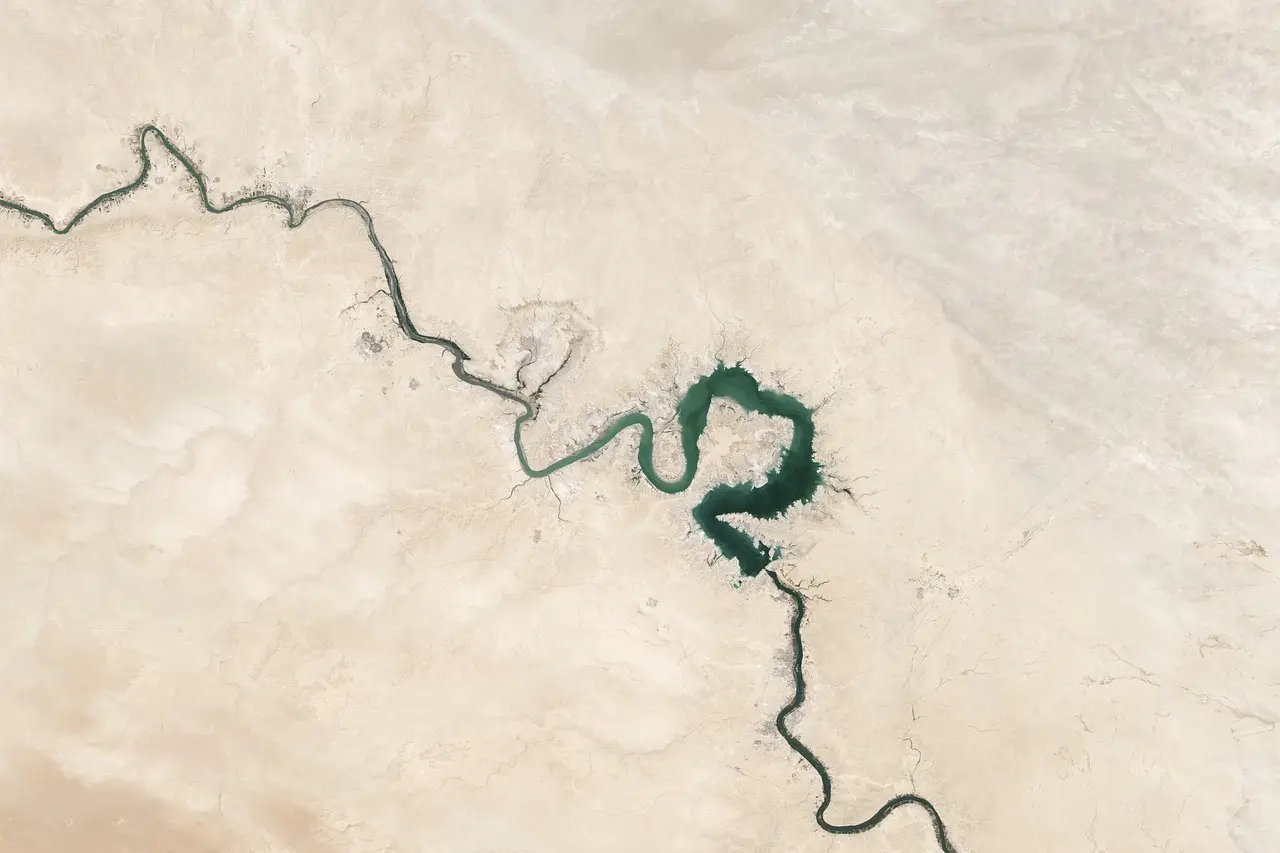
Along the Columbia River in southeastern Washington, the Hanford Site encompasses 586 square miles of nuclear history that shaped the 20th century and continues to influence the 21st. This remote desert location became the birthplace of the atomic age in America, producing the plutonium that ended World War II while creating the nation’s most complex environmental cleanup challenge.
Secret City of the Atomic Age (1943)
In early 1943, the U.S. Army Corps of Engineers selected this sparsely populated area along the Columbia River for one of the Manhattan Project’s most crucial facilities. The location offered abundant electricity from Grand Coulee Dam, unlimited cooling water from the Columbia River, and the isolation necessary for America’s most secret military program.
Construction began immediately, transforming the quiet agricultural communities of Hanford, White Bluffs, and Richland into a massive industrial complex. Approximately 1,500 residents were given 30 days to vacate their homes, farms, and businesses as the government claimed the land through eminent domain. Many families had lived here for generations, building orchards and farms in the desert through innovative irrigation systems.
The official story: war production. The truth: the Manhattan Project, the secret program to build the atomic bomb. The Hanford Engineer Works would produce plutonium-239, the fissile material for the world’s first nuclear weapons. About 51,000 workers passed through the site over the course of the war, with the peak simultaneous workforce reaching roughly 45,000, most unaware of what they were building.
The B Reactor: Birthplace of the Atomic Age
On September 26, 1944, the world’s first full-scale plutonium production reactor achieved criticality. The B Reactor, a massive graphite-moderated structure containing 2,004 aluminum tubes filled with uranium fuel slugs, represented an extraordinary leap in nuclear engineering.
The reactor required approximately 4,000 pounds of uranium to produce just one pound of plutonium through a complex process of neutron bombardment and radioactive decay. Cooling water from the Columbia River flowed through the reactor at 75,000 gallons per minute, carrying away the enormous heat generated by nuclear fission.
The plutonium produced at Hanford powered both the Trinity test in New Mexico and the “Fat Man” bomb dropped on Nagasaki, Japan, on August 9, 1945, helping to end World War II. This achievement came at tremendous cost, not just financial, but environmental and human.
The Ghost Airfield That Never Existed
To support this massive, secret facility, the government built infrastructure that didn’t officially exist. One of these ghost installations was Hanford Field, an airstrip that would never appear on any civilian aeronautical chart.
Constructed between 1942-1944, several miles north of the plutonium production reactors, the airfield featured two paved runways with unpaved extensions, a parallel taxiway, a paved aircraft ramp, and a few small support buildings, all next to the depopulated town of Hanford, which gave the site its name before vanishing from maps.
Security was absolute. From 1942 through 1946, Hanford Field did not appear on sectional aeronautical charts. Pilots flying over the area would see runways and buildings, but no official record acknowledged their existence. The airfield supported transport of personnel and materials, emergency medical evacuations, military and government VIP visits, and security patrols over the restricted area. Commercial pilots avoided the area entirely, federal regulations prohibited unauthorized flights over the Hanford Site.
At least five or six airfields were built on the Hanford Site during the Manhattan Project. Most have vanished entirely. Hanford Field’s deteriorating runways endure within the restricted area, a faint scar on the landscape, a true ghost airfield, visible from the air but officially nonexistent.
“Day’s Pay”: When 51,000 Workers Bought a Bomber
In the spring of 1944, carpenter Max Blanchard received a letter from his son serving overseas, praising the crucial air support provided by bombers during the D-Day invasion of Normandy. Inspired, Blanchard proposed an idea: What if Hanford workers bought a warplane to send to the troops?
The idea spread like wildfire through the construction camps and production facilities. Workers agreed to donate one full day’s wages to purchase a bomber for the war effort. Nearly 51,000 Hanford workers contributed, raising nearly $300,000, enough to buy a brand-new B-17G Flying Fortress from Boeing’s Seattle plant.
On July 23, 1944, the bomber was delivered to Hanford Field for a christening ceremony. Thousands of workers gathered at the secret airstrip to see the plane they had purchased with their sweat and sacrifice. The bomber’s nose bore the inscription: “Presented to the Army Air Forces as a Result of Cash Contributions by Employees of Hanford Engineer Works.”
Brigadier General James E. Parker attended the ceremony, accepting the aircraft on behalf of the Army Air Forces. The workers named it “Day’s Pay”, a simple, powerful tribute to collective sacrifice.
The B-17 took off from Hanford Field, escorted by four fighter planes. It dipped its wing in salute three times before heading east toward the 8th Army Air Force in England. “Day’s Pay” flew approximately 67 combat missions over France, Belgium, and Germany before returning to the United States on July 10, 1945, just weeks before the atomic bombs (using Hanford plutonium) ended the war.
After the war, “Day’s Pay” was declared surplus and scrapped on December 4, 1947, at Kingman Field, Arizona. But its legacy endured. In 1993, a mural was painted on Richland High School depicting the plane and the workers who funded it. In 2023, the Richland Police Department added the B-17 to their official badge design.
Cold War Expansion
Following the war, Hanford continued to play a central role in America’s nuclear weapons program. Eight additional reactors were constructed between 1944 and 1963, making Hanford the primary source of plutonium for the nation’s nuclear arsenal. At its peak in the early 1960s, all nine reactors operated simultaneously, producing plutonium for most of the 60,000+ weapons in the U.S. nuclear stockpile.
Workers processed tons of irradiated uranium fuel in massive chemical separation plants, extracting plutonium through dangerous chemical processes while generating enormous quantities of radioactive waste. Safety protocols, while advanced for the era, proved inadequate to contain the environmental consequences of this unprecedented industrial activity.
Environmental Legacy
The urgency of wartime production and Cold War competition led to waste disposal practices that would be unthinkable today. Hanford generated 56 million gallons of high-level radioactive waste, stored in 177 underground tanks, about one-third of which are now leaking into groundwater.
At least one million gallons of radioactive liquid have leaked into the soil and groundwater, creating a contamination plume extending over 80 square miles. Radioactive materials released into the Columbia River reached the Pacific Ocean 200 miles away, while airborne releases contaminated vast areas downwind.
The human cost became apparent over time. Communities downstream from Hanford experienced higher cancer rates, while workers faced exposure to dangerous radiation levels and toxic vapors.
The World’s Largest Cleanup
Since the last reactor shut down in 1987, Hanford has become the world’s largest environmental cleanup project. Over 10,000 workers are currently employed in cleanup activities, with a budget exceeding $3 billion annually. The cleanup involves converting liquid waste into glass for permanent storage, treating contaminated groundwater, removing millions of tons of contaminated soil and debris, and safely decommissioning nuclear facilities.
Agreements between the Department of Energy, EPA, and Washington State aim to complete tank waste cleanup by 2040, with full site remediation targeted for 2091, expected to cost over $100 billion.
Visiting Today
The B Reactor is now a National Historic Landmark and part of the Manhattan Project National Historical Park, established in 2015. Public tours are available seasonally, offering visitors a rare chance to stand inside the world’s first plutonium production reactor.
The Hanford Site represents both the promise and peril of the atomic age, technological triumph and environmental responsibility, challenging future generations to balance the benefits of nuclear technology with the imperative to protect human health and the natural world.
A Parallel Legacy
The story of Hanford is a story of two legacies running in parallel:
The visible legacy: A bomber funded by workers, flying 67 combat missions, helping defeat Nazi Germany. A community that still honors “Day’s Pay” on its police badges and school murals.
The invisible legacy: A secret city and ghost airfield supporting the production of plutonium that would end the war in the Pacific. An environmental cleanup that will continue into the 22nd century.
Both represent the same truth: ordinary people, doing extraordinary work, sacrificing for a cause they believed in, even when they didn’t fully understand what that cause was.