Standing on this windswept beach at the northern tip of the Kitsap Peninsula, near Hansville, you’re at one of the most significant — and controversial — locations in Pacific Northwest history. Here at Point No Point, a place the S’Klallam knew as Hahdskus, Washington Territorial Governor Isaac Stevens concluded the Treaty of Point No Point on January 26, 1855, with leaders of the S’Klallam, Chimakum, and Skokomish peoples, fundamentally altering the relationship between Indigenous nations and the expanding United States.
A Note on the Name
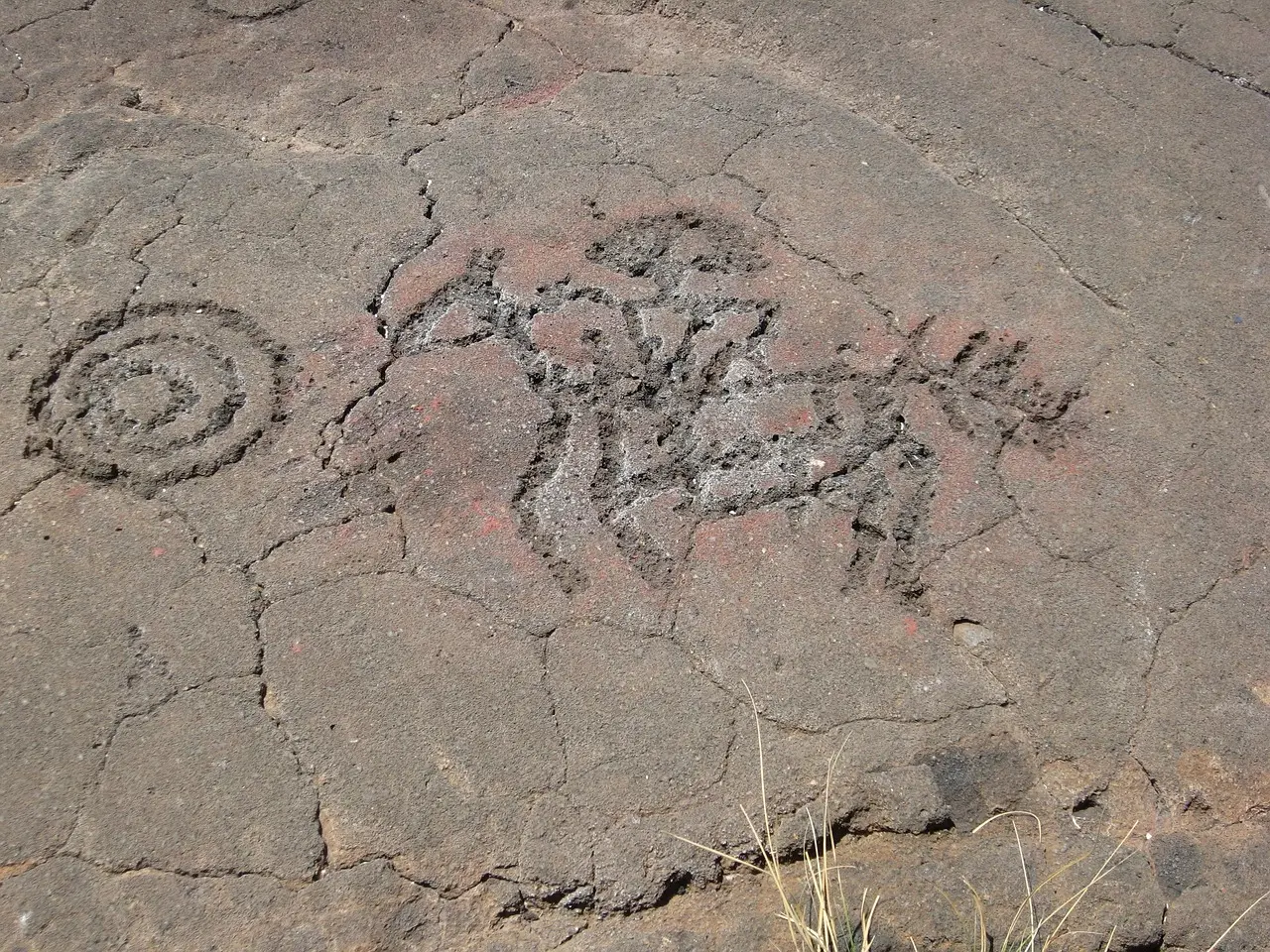
This site is sometimes confused with “Treaty Rock” in Post Falls, Idaho — a different place with a different story. That rock face along the Spokane River bears pictographs associated with an 1871 land arrangement between townsite founder Frederick Post and Chief Andrew Seltice of the Coeur d’Alene Tribe; the Museum of North Idaho notes that despite the name, no formal treaty was ever signed there. The Washington site described here is the treaty ground at Point No Point, where a treaty very much was signed — one that remains legally binding today.
The Context of Expansion
By 1855, American settlement in the Pacific Northwest was accelerating rapidly. The Oregon Territory had been established in 1848, and Washington Territory was created in 1853 with Isaac Stevens as its first governor. Stevens arrived with clear instructions from Washington, D.C.: secure title to Indian lands through treaties that would clear the way for white settlement and economic development.
The federal government’s approach to Indian relations in the Pacific Northwest reflected the broader national policy of Manifest Destiny — the belief that American expansion across the continent was both inevitable and divinely ordained. This ideology provided justification for policies that prioritized white settlement over Indigenous rights and traditional land use.
Isaac Stevens: Man with a Mission
Isaac Stevens was a West Point graduate, Mexican-American War veteran, and ambitious politician who saw his territorial governorship as a stepping stone to higher office. He combined his roles as territorial governor, superintendent of Indian affairs, and railroad survey leader, giving him sweeping authority over regional development and Indian policy.
Stevens brought a military mindset to treaty negotiations, viewing them as campaigns to be won rather than negotiations between sovereign peoples. According to HistoryLink’s account of the proceedings, Stevens arrived with treaty terms already written, presenting them for signature rather than genuine negotiation.
The Tribes at Point No Point
The treaty council brought together representatives of several distinct peoples: the S’Klallam, whose territory spanned much of the northern Olympic Peninsula across Admiralty Inlet from the treaty grounds; the Chimakum, whose lands centered on the Port Townsend area; and the Skokomish, who lived along the river at the head of Hood Canal that bears their name. Each group had distinct cultures, languages, and territorial claims.
These peoples had lived in the region for thousands of years, developing sophisticated societies based on salmon fishing, shellfish harvesting, and seasonal resource management. Their political systems, while different from European models, included complex governance structures and diplomatic protocols that Stevens largely bypassed in his rush to secure treaties.
The Treaty Council
The council at Point No Point lasted just two days — January 25 and 26, 1855 — an impossibly short time to resolve complex questions of land ownership, sovereignty, and cultural survival. HistoryLink records that roughly 1,200 Native people assembled on the beach. On the first day, several leaders voiced objections and resistance; by the morning of the 26th, under pressure, the assembled leaders signed. Among the approximately forty signers were the S’Klallam leader Chits-a-man-han (known to settlers as the Duke of York) and the Skokomish leader Dah-whil-luk.
The proceedings were conducted largely in Chinook Jargon, a trade language of a few hundred words that lacked the vocabulary to convey complex legal concepts. The Port Gamble S’Klallam Tribe notes that the very concept of private land ownership was foreign to S’Klallam culture, and that these language and cultural barriers were exploited in the negotiations. Many tribal leaders likely did not fully understand that they were ceding their ancestral territory in exchange for a small reservation and promises of government support.
Terms of the Treaty
Under the treaty, the tribes ceded the rights to roughly 750,000 acres — a figure cited by the Port Gamble S’Klallam Tribe — stretching from the Strait of Juan de Fuca to the Cascade crest, in exchange for a single reservation of six sections, about 3,840 acres, at the head of Hood Canal. For the S’Klallam, that reservation lay far from their ancestral villages; many refused to relocate and remained near places like Port Gamble, where a reservation was finally established for them only in 1938. The tribes retained fishing, hunting, and gathering rights at their usual and accustomed grounds, though these provisions would be subject to decades of legal battles and government restrictions.
The treaty, ratified by the Senate in 1859, promised $60,000 in payments spread over twenty years, along with schooling, trades instruction, and a physician. These promises were consistently underfunded and poorly implemented, leaving many Native people in poverty while their former lands were distributed to white settlers.
Stevens’s aggressive treaty-making campaign across the territory contributed to armed conflict. The Puget Sound War of 1855-1856 erupted in part over grievances surrounding the treaties and the pace of white settlement. During the conflict, Stevens declared martial law and had the territory’s chief justice, Edward Lander, arrested when the courts challenged him — a demonstration of how thoroughly treaty-making had become entangled with political ambition and territorial development rather than justice for Indigenous peoples.
Long-term Impact on Tribes
The Point No Point Treaty, like other Stevens treaties, had devastating long-term consequences. The loss of traditional territories disrupted seasonal rounds that had sustained communities for millennia, while forced concentration on small reservations created poverty, disease, and social disruption.
The treaty system also undermined traditional tribal governance by requiring tribes to deal with the federal government through appointed agents rather than through their own political systems. This imposed dependency relationship would characterize federal-tribal relations for over a century.
Legal Legacy
The Point No Point Treaty established legal principles that would influence federal Indian law for generations. The reserved rights doctrine — the principle that tribes retained all rights not explicitly ceded — became a cornerstone of modern tribal sovereignty, though these rights went unrecognized and unenforced for many decades.
The Boldt Decision of 1974, which affirmed tribal fishing rights based on the language of the Stevens treaties, vindicated promises made at Point No Point while demonstrating the enduring significance of these 19th-century agreements. Legal battles over treaty rights continue to shape Pacific Northwest politics and natural resource management.
Cultural Preservation
Despite the trauma of land loss and cultural suppression, the tribes that signed the Point No Point Treaty have survived and maintained their distinct identities. The S’Klallam communities — including the Port Gamble S’Klallam, Jamestown S’Klallam, and Lower Elwha Klallam — and the Skokomish have used their reserved rights and legal status to preserve languages, traditions, and cultural practices.
Modern tribal governments have become leaders in natural resource management, cultural education, and economic development while maintaining connections to their ancestral territories. Their persistence demonstrates the resilience of Indigenous cultures in the face of attempted assimilation.
Contemporary Relevance
The Point No Point Treaty remains legally binding and continues to influence contemporary issues including fishing rights, environmental protection, and tribal sovereignty. It is both a historical document and a living agreement that shapes ongoing relationships between tribal, state, and federal governments.
Disputes over salmon habitat, shellfish harvesting, and waterfront development all involve interpretation of rights and obligations established at Point No Point more than a century and a half ago.
Lessons and Reflection
The story of Point No Point illustrates the complex legacy of American expansion and the ongoing consequences of 19th-century Indian policy. While the treaty process was deeply flawed and often unjust, the legal framework it established has also provided the foundation for modern tribal sovereignty and self-determination.
The site reminds us of both the injustices suffered by Native peoples and their remarkable persistence in maintaining their cultures and rights despite overwhelming challenges. As you stand on the beach at Point No Point — today better known for its historic lighthouse and driftwood-strewn shore — you’re at a place where questions of sovereignty, justice, and the legacy of American expansion were set in motion that continue to shape the region today.