The Northwest Guardian
At the northeastern tip of the Quimper Peninsula, at Port Townsend, Fort Worden stands as the command center of what military historians call the “Triangle of Fire” - the three-fort coastal defense system that protected Puget Sound from 1897 to 1953. Built on the bluffs of Port Townsend, this massive installation represented the pinnacle of American coastal defense technology.
Battery Kinzie: Engineering Marvel
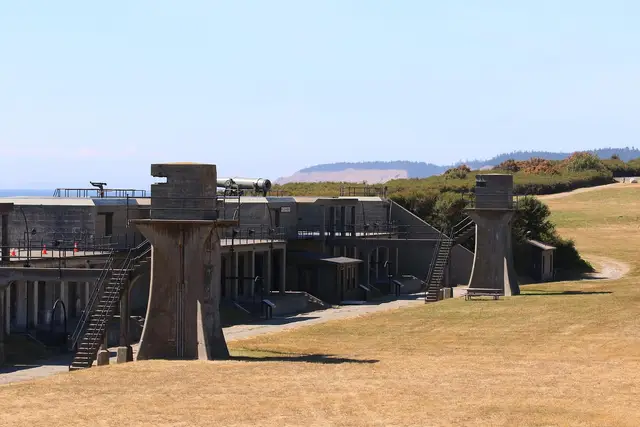
The crown jewel of Fort Worden’s defenses was Battery Kinzie, constructed between 1908-1910 at a cost of $207,832.50 - equivalent to over $6 million today. Named for Brigadier General David Hunter Kinzie, a Civil War veteran who died in 1904, this battery showcased revolutionary “disappearing gun” technology that would define early 20th-century coastal defense.
Technological Wonder
Battery Kinzie housed two massive 12-inch guns, each capable of hurling 1,000-pound shells up to 10 miles. The revolutionary disappearing carriage system allowed these enormous weapons to rise from protective concrete pits, fire, then disappear again behind thick walls - protecting crews from counter-battery fire while maintaining devastating firepower.
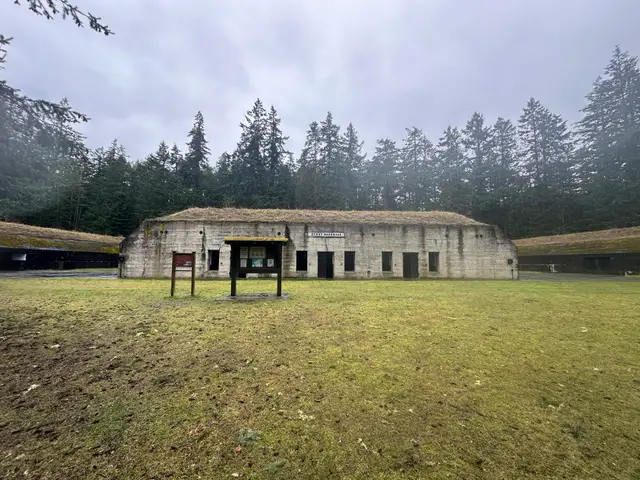
The battery’s 15 rooms across two levels included electric hoists that moved the massive shells and 300-pound powder charges. Advanced ventilation systems isolated soldiers from the tremendous blast shock of the guns, while sophisticated range-finding equipment ensured accurate targeting of enemy vessels.
Strategic Command Center
Fort Worden served as headquarters for the Harbor Defense Command from 1904, coordinating the entire Puget Sound coastal defense network. The fort’s 41 artillery pieces were distributed among 12 batteries, including Batteries Ash, Powell, Brannon, Quarles, Randol, Vicars, Tolles, Stoddard, Benson, Putnam, and Walker.
The installation protected critical targets: the Puget Sound Naval Shipyard at Bremerton, major cities like Seattle and Tacoma, and the vital shipping lanes that connected the Pacific Northwest to global commerce.
Triangle of Fire Partnership
Working in coordination with Fort Casey on Whidbey Island and Fort Flagler on Marrowstone Island, Fort Worden formed part of the “Triangle of Fire” defending the entrance to Puget Sound. The three forts created overlapping fields of fire that no enemy fleet could penetrate without facing devastating crossfire from multiple directions.
Hollywood Fame
Battery Kinzie achieved unexpected fame in 1982 when it served as the dramatic backdrop for “An Officer and a Gentleman.” The battery’s massive concrete structures provided the setting for the film’s climactic scene, where Richard Gere’s character delivers the memorable line “I got nowhere else to go!”
The guns fell silent in 1944 when changing military technology made fixed coastal defenses obsolete. Today, Fort Worden operates as a state park and conference center, while the Puget Sound Coast Artillery Museum preserves the history of these remarkable fortifications.
Visitors can explore Battery Kinzie’s chambers, marvel at the engineering that moved massive artillery pieces, and stand where soldiers once watched the horizons for threats that never came. The battery is evidence of American military engineering and the complex geopolitics of the early 20th century.
The fort’s transformation from fortress to cultural center mirrors the Pacific Northwest’s evolution from frontier to cosmopolitan region, where former battlements now host concerts, conferences, and celebrations of peace.
Point Wilson Lighthouse
Point Wilson Lighthouse: Guardian of the Strait
Standing sentinel at the northeastern tip of the Olympic Peninsula, Point Wilson Lighthouse has guided vessels safely through the strategic waters of Admiralty Inlet for over a century. A light has marked this point since 1879; the current concrete tower was built in 1914 as part of the comprehensive coastal defense system at Fort Worden. This lighthouse represents the integration of maritime safety and military security that characterized early 20th-century Pacific Northwest development.
Strategic Maritime Location
Point Wilson’s selection for lighthouse construction reflected its commanding position at the entrance to Puget Sound, where vessels approaching from the Strait of Juan de Fuca required reliable navigation aids to safely enter the protected waters that led to major ports including Seattle, Tacoma, and the Puget Sound Naval Shipyard at Bremerton.
The point’s strategic importance had been recognized for decades before lighthouse construction began. Indigenous peoples had used the prominent headland as a landmark for coastal travel, while early European and American mariners appreciated its value for navigation along the complex waterways of the Puget Sound region.
The lighthouse’s location within Fort Worden created unique circumstances where civilian maritime safety functions operated alongside military coastal defense preparations. This integration reflected the federal government’s recognition that protecting Puget Sound required both military installations and reliable navigation aids for the commercial and naval vessels that increasingly depended on the region’s protected waters.
Fort Worden Integration
Point Wilson Lighthouse was constructed as an integral component of Fort Worden, one of three coastal defense installations built to protect the Puget Sound Naval Shipyard from potential enemy attack. The lighthouse served dual functions, guiding civilian vessels safely through Admiralty Inlet while supporting the fort’s mission of defending one of America’s most important naval facilities.
The lighthouse’s integration with military operations required careful coordination between civilian lighthouse keepers and military personnel. The Lighthouse Service maintained responsibility for navigation functions while the Army controlled overall security and access to the point. This unusual arrangement reflected the importance both services placed on maintaining safe navigation for the increasing naval and commercial traffic using Puget Sound.
During World War I, the lighthouse took on additional strategic importance as naval activity intensified dramatically throughout Puget Sound. The beacon helped guide naval vessels, merchant ships carrying war supplies, and passenger steamers through waters that had become crucial to the American war effort. The lighthouse keeper’s detailed logbooks from this period document the remarkable increase in maritime traffic and the challenges of maintaining navigation services during wartime conditions.
Lighthouse Construction and Technology
Construction of Point Wilson Lighthouse began in 1913 using the latest lighthouse technology and construction techniques available. The 46-foot concrete tower was designed to withstand the severe weather conditions that regularly affected the exposed point while providing optimal visibility for the lighthouse’s beacon.
The lighthouse was equipped with a fourth-order Fresnel lens that created a powerful beam visible for 17 nautical miles in clear weather. This sophisticated optical system, manufactured in Paris by Barbier, Benard & Turenne, focused light from a central lamp into a concentrated beam that could penetrate the fog and darkness that frequently reduced visibility in the Strait of Juan de Fuca.
The lighthouse’s automated systems represented advanced technology for the era, including electric lighting that provided more reliable illumination than the oil-burning lamps used in older lighthouses. This electrical system required the lighthouse to be connected to Fort Worden’s power generation facilities, creating an early example of shared infrastructure between civilian and military installations.
Lighthouse Keeper Operations
Point Wilson lighthouse keepers faced unique circumstances that combined traditional lighthouse keeping responsibilities with the special challenges of operating within a military installation. The keeper’s residence provided comfortable accommodations while serving as the operational headquarters for lighthouse maintenance and coordination with fort personnel.
Daily duties included maintaining the lighthouse’s electrical systems, cleaning the Fresnel lens, monitoring weather conditions, and recording maritime traffic in Admiralty Inlet. The lighthouse keeper also served as an unofficial harbor pilot, providing guidance to vessel captains unfamiliar with local conditions while maintaining communication with fort personnel about shipping activities.
The lighthouse keeper’s family became part of the broader Fort Worden community, with children attending the military post’s school and families participating in social activities that brought together civilian and military personnel. This integration created unique opportunities for cultural exchange while ensuring that lighthouse operations remained coordinated with military activities.
Maritime Traffic and Navigation Services
Throughout its operational history, Point Wilson Lighthouse served increasing volumes of maritime traffic as Puget Sound developed into one of America’s most important naval and commercial waterways. The lighthouse provided essential navigation services for vessels ranging from small fishing boats to massive battleships and aircraft carriers.
The lighthouse’s beacon proved particularly valuable during the frequent fog conditions that could reduce visibility to near zero in the Strait of Juan de Fuca. Experienced mariners learned to depend on the lighthouse’s distinctive flashing pattern to identify their position and plan safe approaches to Puget Sound’s inner waters.
During World War II, the lighthouse’s importance increased dramatically as naval activity reached unprecedented levels. Aircraft carriers, battleships, cruisers, and countless support vessels depended on the lighthouse for safe navigation while entering and leaving Puget Sound. The lighthouse keeper maintained detailed records of this massive maritime traffic while ensuring continuous operation despite wartime security restrictions.
Automation and Preservation
The automation of Point Wilson Lighthouse in 1976 ended over six decades of resident lighthouse keeping while ensuring continued operation of the beacon for maritime safety. Modern electronic systems replaced the manual operations that had required daily attention from skilled lighthouse keepers, but the lighthouse continued serving its essential navigation function.
The lighthouse’s integration with Fort Worden’s transformation into a state park created opportunities for historic preservation and public interpretation that might not have been available if the lighthouse had remained under federal maritime jurisdiction. Washington State Parks assumed responsibility for the lighthouse structure while the Coast Guard maintained the navigation equipment.
Restoration efforts focused on returning the lighthouse to its historical appearance while adapting the keeper’s residence and surrounding area for public visitation. These preservation activities required extensive research into the lighthouse’s construction history and operational procedures to ensure authentic interpretation of maritime heritage.
Educational Programs and Public Access
Today, Point Wilson Lighthouse serves as both an active navigation aid and an educational facility that interprets Pacific Northwest maritime heritage for thousands of visitors annually. The lighthouse’s location within Fort Worden Historical State Park provides easy public access while protecting the structure within a preserved historical landscape.
Guided tours of the lighthouse provide spectacular views of the Strait of Juan de Fuca and Admiralty Inlet while explaining the technical and social history of lighthouse operations. Visitors learn about Fresnel lens technology, lighthouse keeper duties, and the integration of civilian and military functions that characterized Point Wilson’s unique operational history.
Special programs include evening lighthouse tours that allow visitors to see the beacon in operation while experiencing sunset views over the Olympic Mountains and Strait of Juan de Fuca. These programs provide memorable experiences that connect visitors to maritime heritage while promoting appreciation for the preservation efforts that maintain this important landmark.
Contemporary Maritime Heritage
Point Wilson Lighthouse continues operating as an active navigation aid while serving as a symbol of the maritime heritage that remains central to Pacific Northwest identity. The lighthouse’s beacon still guides vessels through the same waters that have carried indigenous canoes, sailing ships, steamboats, and modern vessels for thousands of years.
The lighthouse’s preservation within Fort Worden Historical State Park demonstrates how historic sites can successfully combine multiple interpretive themes, military history, maritime heritage, and natural resource conservation, to create comprehensive educational experiences that serve diverse visitor interests while maintaining historical authenticity.
Educational partnerships between the lighthouse and local schools, maritime organizations, and historical societies ensure that Point Wilson’s maritime heritage remains relevant for contemporary audiences while preserving traditional knowledge about navigation, lighthouse technology, and the maritime industries that continue to shape the Pacific Northwest economy.