A Corner of the Triangle of Fire
On the windswept northern tip of Marrowstone Island, Fort Flagler was, according to HistoryLink, the first of the three main Puget Sound defense forts to be officially activated, on July 27, 1899. Together with Fort Worden near Port Townsend and Fort Casey on Whidbey Island, it formed the “Triangle of Fire” — the three-fort network built to bar enemy warships from Admiralty Inlet and protect the inland waters of Puget Sound, including the Navy’s shipyard at Bremerton.
Strategic Island Position
Fort Flagler’s location at Marrowstone Point commanded Admiralty Inlet, the main shipping channel into Puget Sound. Any hostile fleet would have had to steam through overlapping fields of fire from all three forts to reach the cities and shipyards beyond.
An Endicott-Era Fort
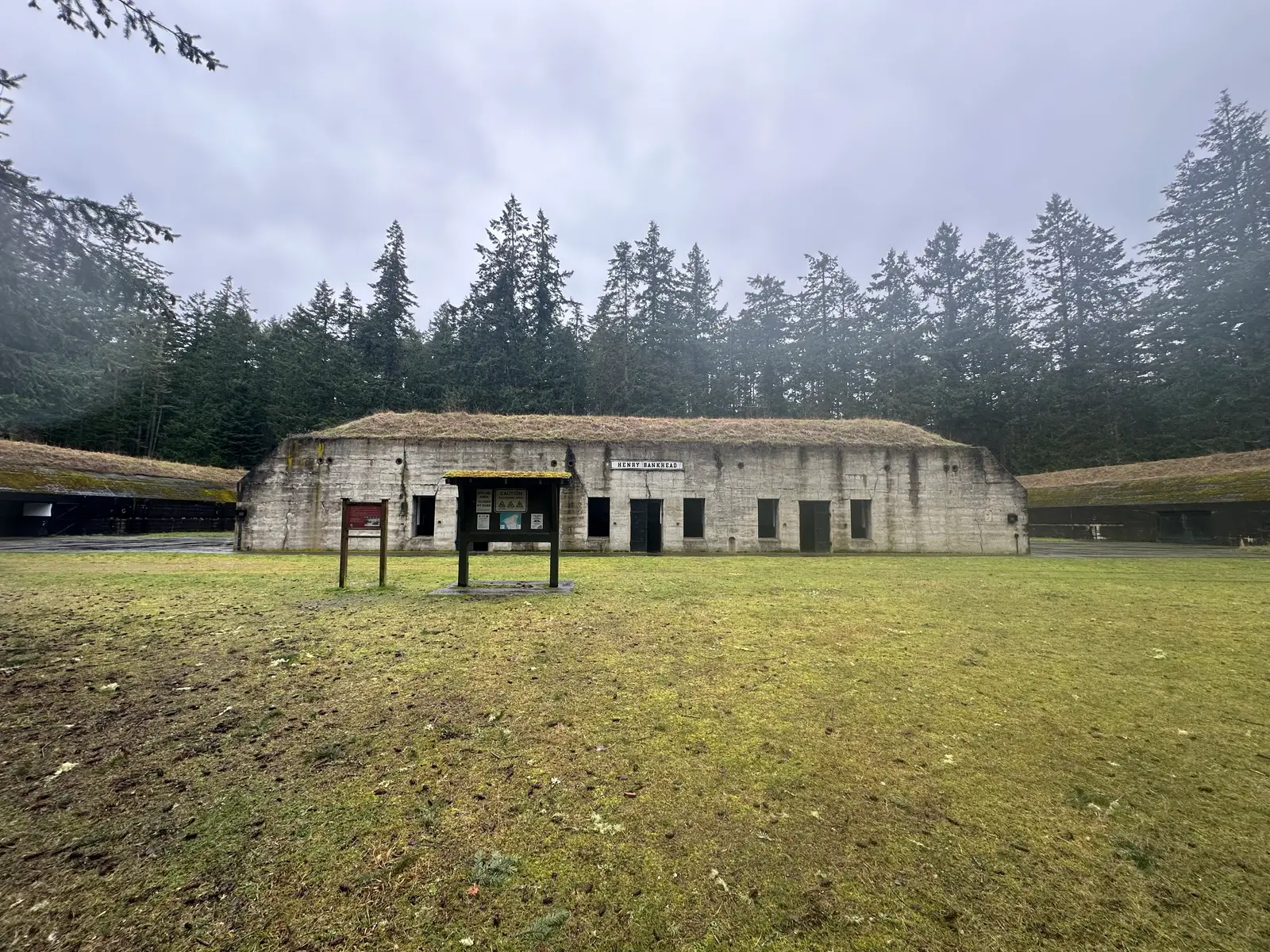
Fort Flagler was a product of the Endicott program, the sweeping modernization of American coastal defenses recommended by the 1886 Endicott Board. Construction began in June 1897, and the fort eventually mounted 26 artillery pieces distributed among its batteries. The first three batteries — Rawlins, Revere, and Wilhelm — each mounted two guns; six more batteries were added between 1900 and 1906.
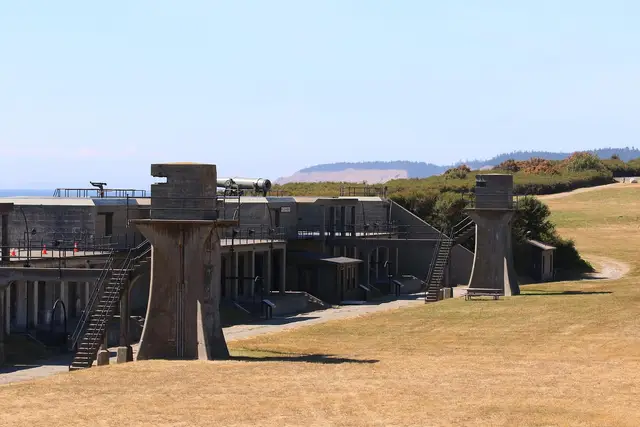
The heaviest weapons were Battery Wilhelm’s two 12-inch guns and four 10-inch guns at Batteries Rawlins and Revere, backed by six 6-inch disappearing guns, smaller rapid-fire pedestal guns for use against fast, close-in vessels, and a battery of eight 12-inch mortars that could drop shells onto a warship’s lightly armored decks from above.
Like its Endicott-era contemporaries, the fort combined massive concrete emplacements, protected magazines, searchlights, and electrical fire-control systems — formidable technology for its day, shared across the harbor defense network rather than invented here.
Guardian Years
From 1899 to 1953, Fort Flagler stood watch over Puget Sound’s approaches. During World War I, twelve of the fort’s artillery pieces were removed and sent to Europe, reflecting the urgent need for heavy artillery on the Western Front. In World War II the post found a new role as a training ground for amphibious warfare, and it continued to serve through the Korean War era before being deactivated on June 30, 1953.
Cultural Heritage
Fort Flagler’s legacy extends beyond military history. The installation’s buildings, roads, and infrastructure shaped Marrowstone Island’s development and provided employment for local communities for half a century.
Modern Preservation
After deactivation, Washington State Parks acquired the fort in parcels between 1957 and 1962, and the park opened to the public in 1960. Today, Fort Flagler Historical State Park preserves the installation for future generations. Visitors can explore the original gun emplacements, tour restored buildings, and learn about the technology that once guarded the Pacific Northwest. The park’s museum displays artifacts from the fort’s active years, including shells, uniforms, and equipment that tell the story of coastal defense.
Living History
The park offers camping, hiking, and educational programs that bring the fort’s history to life. Guided tours of the gun batteries provide insights into the daily lives of the soldiers who manned these remote outposts. The fort’s transformation from military installation to recreational destination reflects the Pacific Northwest’s journey from frontier territory to peaceful modern society.
Fort Flagler is a well-preserved example of American coastal defense engineering and the geopolitics of the early 20th century. Its big guns were never fired at an enemy, but the fort’s story — built for a naval attack that never came — makes it one of the most evocative places on Puget Sound to walk through military history.