Standing at Ebey’s Landing, you’re witnessing one of the most complete and well-preserved examples of Pacific Northwest pioneer life. This sweeping landscape tells the story of Colonel Isaac Neff Ebey and the brave settlers who first claimed land here under the Donation Land Claim Act of 1850.
The First Settlement
In 1850, Colonel Ebey became the first permanent settler on central Whidbey Island, establishing a claim that would become the heart of this historic reserve. The rich, fertile prairie soil convinced him this was the perfect place to build a new life, writing to his family that he had found “almost a paradise of nature.”
A Working History
Unlike many historical sites, Ebey’s Landing isn’t frozen in time - it’s still a working community. The same fields that sustained the Ebey family continue to produce crops today. Historic barns dot the landscape, many still in use, their weathered boards telling stories of generations of farmers who have worked this land.
Natural Fortress
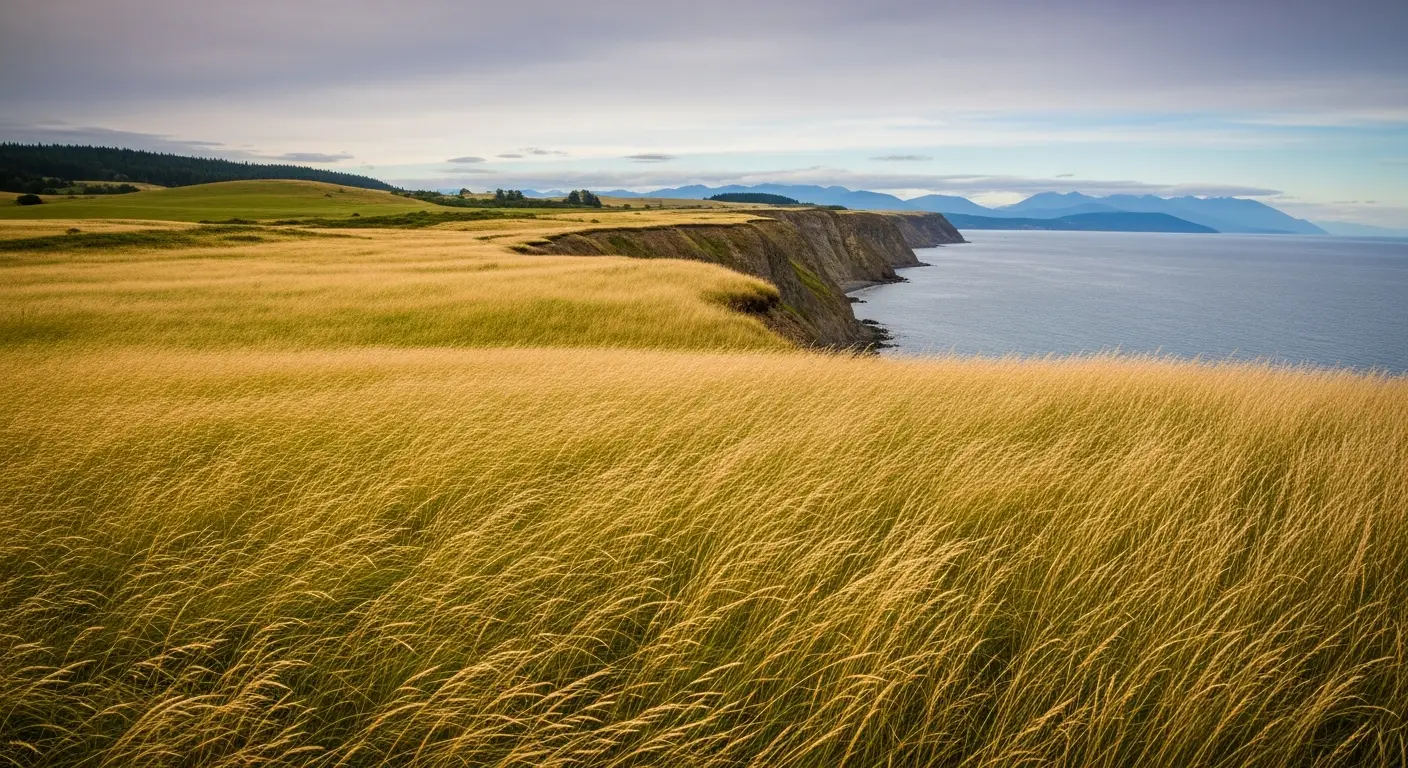
The location wasn’t chosen just for its fertile soil. The high bluffs overlooking Admiralty Inlet provided a natural lookout point, crucial for early settlers watching for both friend and foe arriving by sea. Today, these same bluffs offer spectacular views and are part of a popular hiking trail.
Prairie Life
The Ebey’s Landing prairie represents one of the finest remaining examples of pre-settlement landscape in the Puget Sound region. Native Americans had long maintained these prairies through controlled burns, creating perfect conditions for camas and other food plants. The settlers continued to utilize this rich landscape, establishing farms that still operate today.
What to Look For
As you explore:
- The historic Ferry House (1860), which served travelers between Port Townsend and Whidbey Island
- Original farmsteads with buildings dating back to the 1850s
- The Ebey family blockhouse, built for protection during tensions with local tribes
- The prairie landscape, largely unchanged since settlement days
- Historic cemeteries that tell the stories of the area’s pioneers
Living History
Today, Ebey’s Landing National Historical Reserve represents a unique partnership between private landowners, local government, and the National Park Service. It’s not just a memorial to the past - it’s a living community where modern residents continue the agricultural traditions started by the pioneers, maintaining a direct link to our region’s settlement history.
As you walk these grounds, you’re not just visiting history - you’re witnessing its continuation, as each generation adds its own chapter to this remarkable story of Pacific Northwest settlement.