The Columbia River Gorge stands as one of North America’s most dramatic geological features, a canyon carved through the Cascade Mountains that serves as the only sea-level route connecting the Pacific Northwest’s inland valleys to the ocean. This 80-mile corridor, with walls rising up to 4,000 feet, tells an epic story of volcanic violence, catastrophic floods, and human perseverance spanning thousands of years.
Geological Genesis
The Gorge’s formation began 40-60 million years ago when massive granite uplifts created the outline of the Columbia Basin. But the landscape we see today was primarily shaped during the Miocene epoch, 17-12 million years ago, when the largest volcanic eruptions in Earth’s recent history occurred in eastern Oregon, Washington, and Idaho.
These Columbia River Basalt Group eruptions were unlike anything in recorded human experience. Approximately 270 volcanic fissures released molten lava across 64,000 square miles, with individual flows sometimes traveling 400 miles to reach the Pacific Ocean. The lava accumulated in layers 2,000-5,000 feet thick, creating the smooth Columbia Plateau and the distinctive hexagonal basalt columns visible throughout the Gorge today.
The final dramatic carving occurred during the Missoula Floods 19,000-15,000 years ago, when glacial Lake Missoula repeatedly burst its ice dam in Montana. These catastrophic floods, each carrying more water than all current rivers combined, roared through the Gorge about 40 times over 2,500 years, scouring out the steep walls and creating the canyon’s modern profile.
Indigenous Heritage
For over 13,000 years, Native American peoples have called the Columbia River Gorge home, drawn by its abundant salmon runs and strategic location. Archaeological evidence near Celilo Falls reveals continuous human occupation for 10,000 years, making this one of the longest-inhabited places in North America.
The Gorge supported diverse tribal cultures speaking different languages. Sahaptin speakers, including the Yakama and Umatilla peoples, controlled the upper Columbia, while Chinookan speakers, the Wasco and Wishram, dominated the area around The Dalles. These groups created one of North America’s most important trading centers at Celilo Falls, where Native Americans from across the region gathered to trade goods, share stories, and maintain cultural connections.
The abundance was extraordinary. During peak salmon runs, waterfalls throughout the Gorge turned silver with fish, and Native Americans developed sophisticated techniques for catching, processing, and preserving salmon that sustained their communities year-round.
Lewis and Clark Passage
In October and November 1805, the Corps of Discovery spent 37 days navigating the treacherous Columbia River Gorge on their journey to the Pacific Ocean. The expedition encountered massive waterfalls, dangerous rapids, and challenging weather, but also experienced the remarkable hospitality of the Wasco and Wishram peoples at The Dalles.
Captain Clark documented the Gorge’s “high mountains on each side, containing scattering pine white oak” and observed evidence of massive landslides and volcanic activity. The expedition’s detailed journals and maps became crucial documents supporting American territorial claims to the Oregon Country.
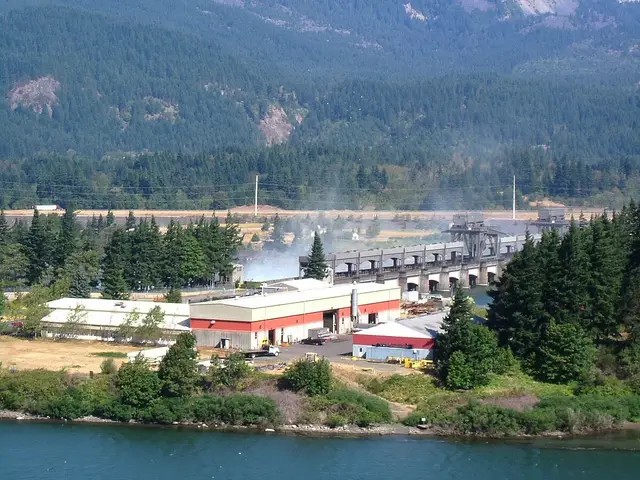
The Columbia River Gorge’s strategic importance continued into the modern era. The completion of Bonneville Dam in 1938 forever changed the river’s character, flooding the Cascades Rapids and forcing the relocation of Native American communities. Decades later, The Dalles Dam inundated the thundering Celilo Falls in 1957. Later dams transformed the once-wild Columbia into a series of lakes, enabling navigation and hydroelectric power generation but fundamentally altering the ecosystem that had sustained indigenous peoples for millennia.
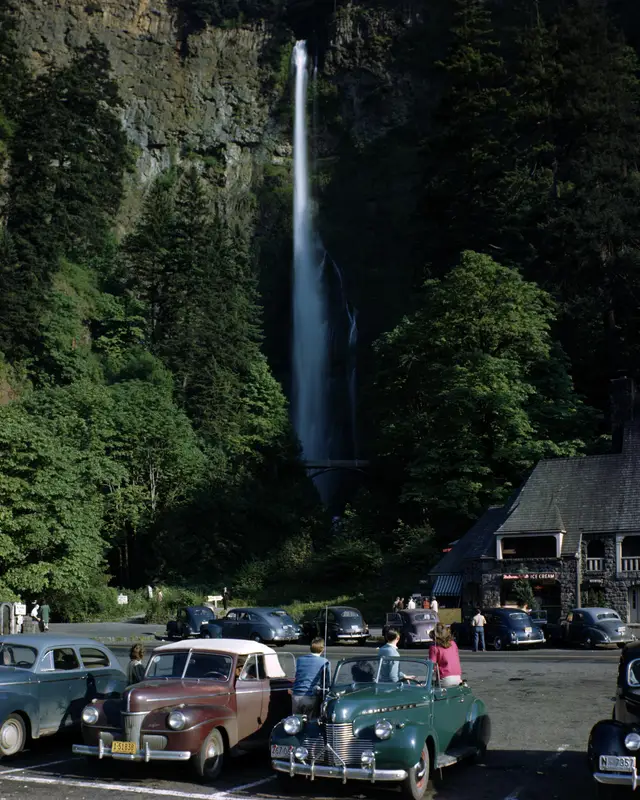
Today, the Columbia River Gorge National Scenic Area protects this remarkable landscape’s natural beauty while honoring its complex cultural heritage. With over 90 waterfalls on the Oregon side alone, including the iconic Multnomah Falls, the Gorge continues to inspire visitors with its raw power and timeless beauty, evidence of the geological forces that shaped the Pacific Northwest.
Columbia River Gorge Wind Farms
Columbia River Gorge Wind Farms: Harnessing Nature’s Power
Standing among the towering white turbines that dot the Columbia River Gorge’s dramatic landscape, you’re witnessing one of the most significant renewable energy developments in North America. These wind farms represent the Pacific Northwest’s leadership in clean energy technology while embodying the complex relationship between environmental protection, economic development, and our urgent need to address climate change.
The Perfect Wind Corridor
The Columbia River Gorge creates one of the most reliable and powerful wind resources in the United States. As air masses move from the high-pressure systems over the Pacific Ocean toward the low-pressure areas inland, the narrow gorge acts as a natural wind tunnel, accelerating air speeds and creating consistent, powerful winds ideal for electricity generation.
This unique geographic feature results from the Columbia River’s path through the Cascade Mountains, where the river carved the only sea-level passage through the mountain range. The gorge’s orientation and topography channel Pacific air masses eastward, creating wind patterns that have blown consistently for thousands of years.
Early Wind Development
Commercial wind development in the Columbia River Gorge began in the early 1980s with small experimental installations, but the industry’s real growth started in the 1990s as wind technology improved and environmental concerns about fossil fuels increased. Early wind farms faced significant technical challenges and skeptical reception from utility companies accustomed to conventional power sources.
The federal Production Tax Credit, enacted in 1992, provided crucial financial incentives for wind development, while Oregon and Washington’s renewable energy policies created markets for wind-generated electricity. These policy supports helped establish the economic foundation for large-scale wind development.
Technological Evolution
The wind turbines visible today represent dramatic technological advances from early wind machines. Modern turbines stand over 400 feet tall with rotor diameters exceeding 300 feet, capable of generating 2-3 megawatts of electricity each, enough to power hundreds of homes.
Advanced computer controls allow turbines to optimize their orientation and blade angles automatically, maximizing energy capture while protecting equipment during extreme weather. The integration of weather forecasting and grid management systems enables wind farms to contribute reliably to regional electricity supplies.
Environmental Benefits
The Columbia River Gorge wind farms generate enough clean electricity annually to power over 300,000 homes while displacing millions of tons of carbon dioxide emissions from fossil fuel power plants. This contribution to climate change mitigation demonstrates how renewable energy can provide environmental benefits at a massive scale.
Wind energy’s environmental advantages extend beyond carbon reduction to include minimal water consumption, no air pollution during operation, and the preservation of land for multiple uses. Unlike fossil fuel extraction, wind farming allows continued agricultural and recreational use of the land beneath turbines.
Environmental Concerns
Despite their clean energy benefits, wind farms have created environmental challenges, particularly regarding bird and bat mortality. The gorge’s wind corridors are also major migration routes for raptors, waterfowl, and other birds, leading to collisions with turbine blades that have raised conservation concerns.
Extensive environmental studies and mitigation measures have been implemented, including seasonal shutdown periods during peak migration, radar systems to detect approaching birds, and habitat restoration projects to offset impacts. These efforts demonstrate how renewable energy development can evolve to minimize environmental harm while maintaining climate benefits.
Economic Impact
Wind development has brought significant economic benefits to rural communities in the Columbia River Gorge region. Lease payments to landowners provide steady income that supplements agricultural revenues, while construction and maintenance jobs create employment opportunities in areas with limited economic alternatives.
The tax revenue generated by wind farms supports local schools, infrastructure, and public services in counties that previously struggled with declining natural resource industries. Wind development has helped diversify rural economies while maintaining agricultural land use.
Cultural and Aesthetic Concerns
The visual impact of industrial-scale wind development in the Columbia River Gorge’s scenic landscape has generated controversy and legal challenges. Critics argue that the turbines industrialize one of the nation’s most beautiful natural areas, while supporters contend that clean energy infrastructure represents responsible environmental stewardship.
Tribal nations have expressed concerns about wind development’s impact on cultural sites and traditional activities, while also recognizing the importance of clean energy for addressing climate change. These discussions highlight the complexity of balancing environmental protection, cultural preservation, and energy needs.
Grid Integration
The Columbia River Gorge wind farms are connected to the regional electrical grid through high-voltage transmission lines that carry clean electricity to population centers throughout the Pacific Northwest and California. This integration demonstrates how renewable energy can provide power across vast distances while supporting grid stability.
Advanced forecasting and grid management systems help utilities integrate variable wind generation with other power sources, maintaining reliable electricity supply despite the intermittent nature of wind resources. These technological solutions are crucial for expanding renewable energy’s role in the electrical grid.
Innovation Hub
The concentration of wind development in the Columbia River Gorge has created a renewable energy innovation hub, attracting research institutions, technology companies, and training programs focused on clean energy advancement. The region serves as a testing ground for new wind technologies and grid integration solutions.
Educational institutions offer specialized programs in renewable energy technology, while research facilities study everything from turbine efficiency improvements to environmental impact mitigation. This innovation ecosystem demonstrates how renewable energy development can drive technological advancement and economic diversification.
Policy Leadership
The success of Columbia River Gorge wind development has influenced renewable energy policies throughout the United States and internationally. The region’s experience provides models for environmental review processes, community engagement strategies, and technological solutions that other areas can adapt to their specific conditions.
State renewable energy standards and carbon reduction goals have been informed by the demonstrated success of large-scale wind development, while utility-scale wind contracting practices developed in the Pacific Northwest have been adopted nationwide.
Climate Change Response
As climate change creates more urgent demands for rapid decarbonization, the Columbia River Gorge wind farms represent a crucial component of the regional response to global warming. The clean electricity generated here helps reduce greenhouse gas emissions while demonstrating the feasibility of large-scale renewable energy deployment.
The wind farms also serve as visible symbols of climate action, demonstrating that communities can take meaningful steps to address global environmental challenges while supporting local economic development. This symbolic value is as important as the actual emissions reductions achieved.
Future Expansion
Ongoing technological improvements and policy support continue driving wind development expansion in the Columbia River Gorge. Newer turbines generate more electricity from the same wind resources, while improved environmental mitigation reduces ecological impacts.
Energy storage technologies being deployed alongside wind farms help address intermittency challenges while providing additional grid services. These developments point toward an energy future where renewable resources like wind provide the majority of electricity generation.
Global Significance
The Columbia River Gorge wind development serves as a model for renewable energy deployment worldwide, demonstrating how geographic advantages, supportive policies, and technological innovation can combine to create successful clean energy projects. International delegations regularly visit the area to study best practices for wind development.
The project’s success has influenced renewable energy development in countries facing similar challenges of balancing environmental protection, economic development, and climate action. The gorge’s wind farms represent proof that large-scale renewable energy is both technically feasible and economically viable.
Living Laboratory
As you observe these massive turbines turning in the Columbia River’s wind, you’re witnessing a living laboratory for humanity’s transition to sustainable energy. The wind farms represent both technological achievement and ongoing experimentation as we learn to harness natural forces for human needs while minimizing environmental impact.
The Columbia River Gorge wind farms embody the Pacific Northwest’s tradition of environmental innovation while pointing toward a future where clean energy provides the foundation for sustainable prosperity. They demonstrate that addressing climate change requires bold action and technological innovation, but also careful attention to environmental and community concerns.