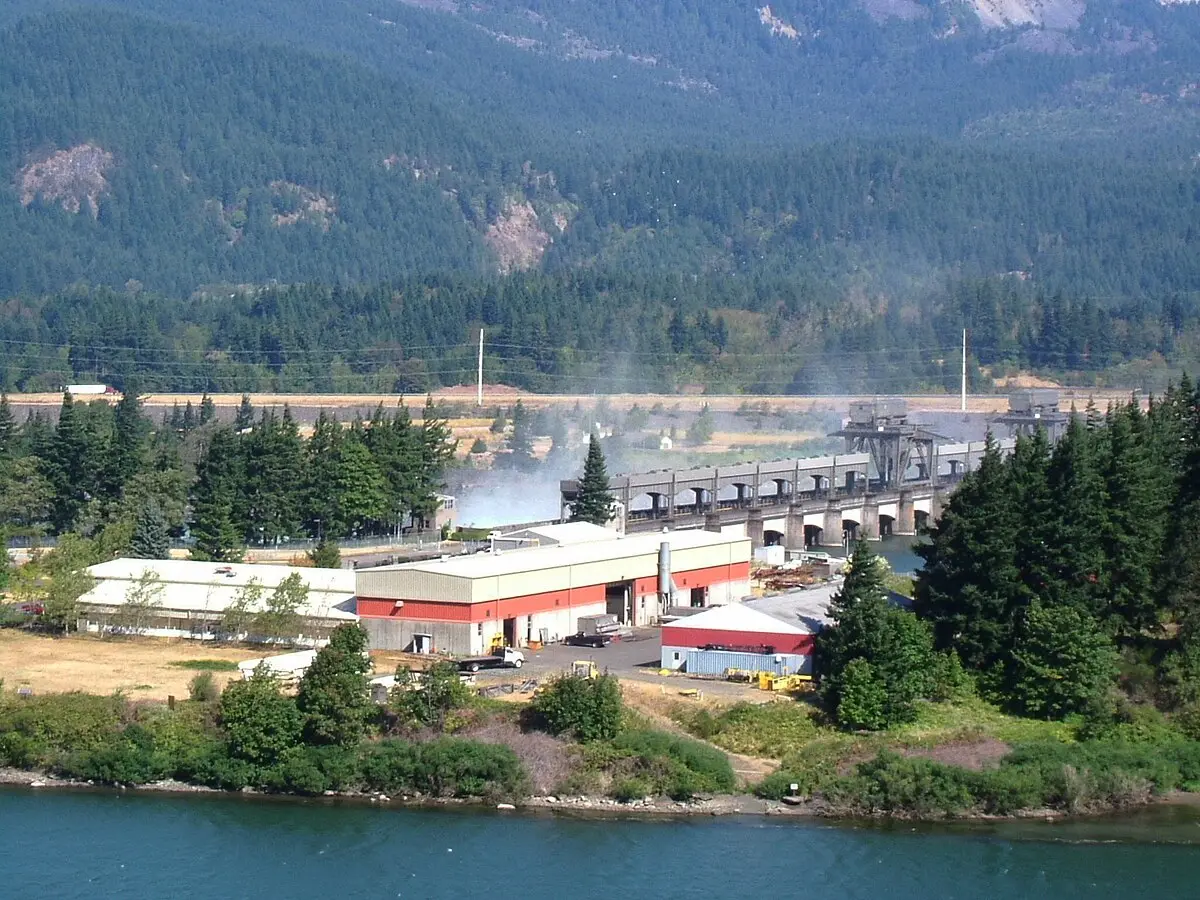
Standing as one of the most ambitious New Deal infrastructure projects, Bonneville Dam transformed both the Columbia River and the Pacific Northwest economy when it was completed in 1938. This massive concrete structure, stretching 2,690 feet across the Columbia River, represents more than engineering excellence, it embodies the Roosevelt administration’s vision of federal investment in regional development.
Depression-Era Vision
When construction began in 1933, the United States was deep in the Great Depression. President Franklin Roosevelt saw the Columbia River’s untapped hydroelectric potential as a solution to multiple crises: unemployment, rural electrification, and industrial development. The dam provided jobs for 3,000 workers at its construction peak, most hired directly from relief and welfare rolls at the significant wage of 50 cents per hour.
Working around the clock in three 8-hour shifts, crews placed over one million cubic yards of concrete while battling the Columbia’s powerful currents. They developed innovative construction techniques, including massive timber cofferdams and the largest scale model in engineering history to test their designs.
Engineering Marvel
The dam’s technical specifications were groundbreaking for their era. The spillway stretched 1,450 feet with 18 massive gates capable of handling the Columbia’s spring floods. The original powerhouse, 1,027 feet long, housed 10 generators producing 526.7 megawatts of electricity. A navigation lock 500 feet long allowed ships to bypass the dam, while fish ladders addressed concerns about salmon migration.
Perhaps most remarkably, the project was completed under budget and ahead of schedule, evidence of New Deal efficiency and worker dedication during desperate economic times.
Social and Environmental Impact
Bonneville Dam’s completion brought dramatic changes to the Columbia River ecosystem and surrounding communities. The rising waters of Lake Bonneville, the 48-mile reservoir created behind the dam, flooded Native American villages and traditional fishing sites, eliminating the historic Cascade Rapids that had challenged river travelers for millennia.
Yet the dam also sparked the Pacific Northwest’s aluminum industry, providing the cheap electricity that would prove crucial during World War II aircraft production. Roosevelt’s insistence on public power ownership led to the creation of the Bonneville Power Administration in 1937, establishing a preference for public and cooperative electricity distribution that continues today.
Cultural Legacy
The dam captured the American imagination as a symbol of New Deal optimism and technological progress. The Bonneville Power Administration even hired folk singer Woody Guthrie to write songs celebrating the project, including his famous “Roll On, Columbia, Roll On.”
Today, with the addition of a second powerhouse completed in 1981 and new navigation locks finished in 1993, Bonneville Dam generates over 1,000 megawatts of clean electricity. Designated a National Historic Landmark District in 1987, it stands as a monument to an era when federal investment in infrastructure transformed entire regions and demonstrated government’s capacity to tackle seemingly impossible challenges.