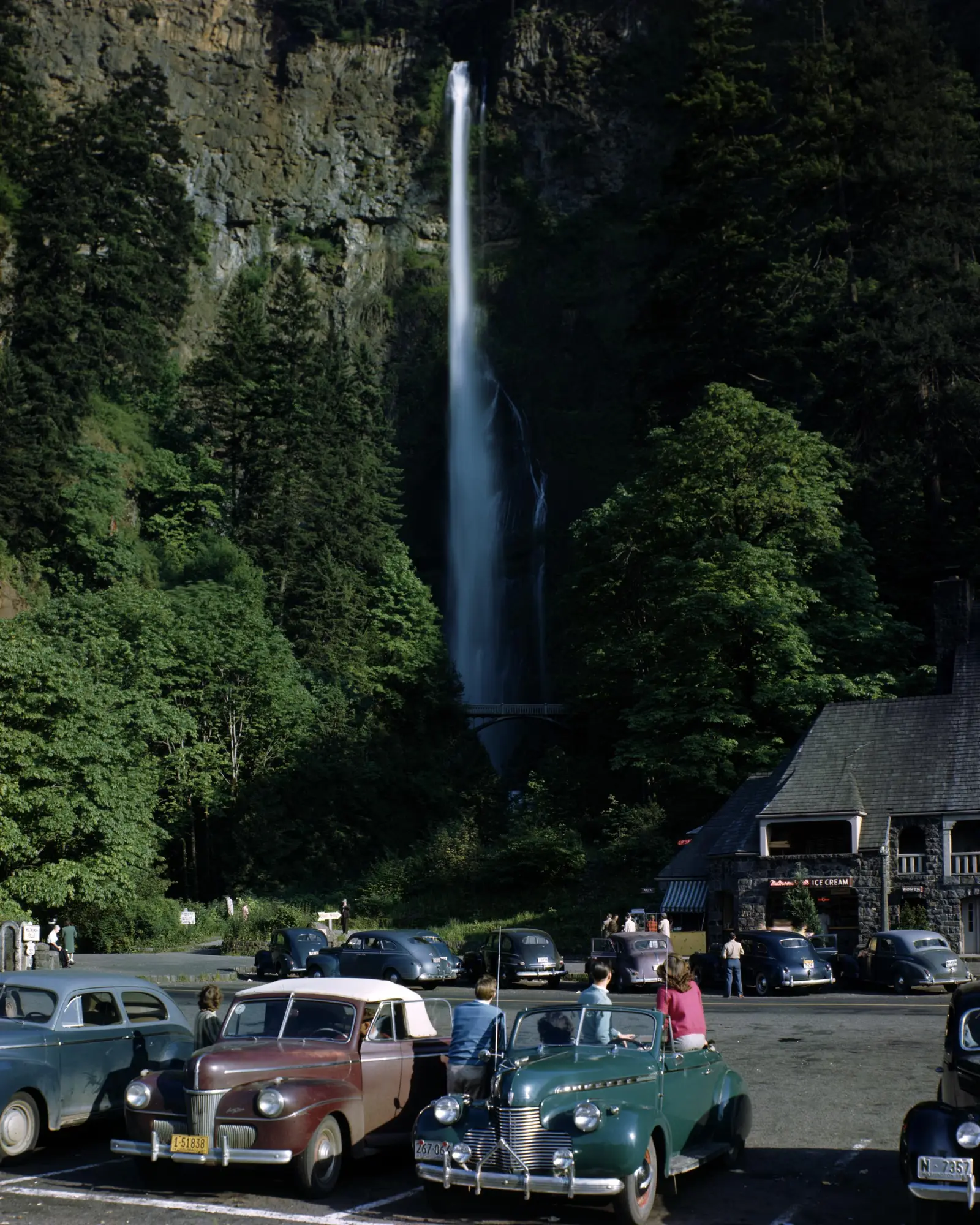
Plunging 620 feet in two dramatic tiers through the Columbia River Gorge, Multnomah Falls stands as Oregon’s tallest waterfall and one of the most visited natural attractions in the Pacific Northwest. Fed by underground springs from Larch Mountain, this magnificent cascade carries not only the waters of the high country but also the sacred stories of the Chinookan peoples who first called this place home.
The Legend of Ultimate Sacrifice
The most profound story of Multnomah Falls comes from the Multnomah people, a Chinookan tribe whose villages dotted the Columbia River region for thousands of years. Their legend speaks of love, sacrifice, and the power of selfless devotion to community, themes that resonate across cultures and generations.
Long ago, the chief of the Multnomah people had a beloved daughter who brought joy to his heart, especially after losing his sons in battle. When a terrible plague struck the village, threatening to destroy everyone, an old medicine man revealed a devastating prophecy: to save the people, a young maiden, specifically the daughter of a chief, would need to sacrifice her life to the Great Spirit.
The chief initially refused to consider such a terrible loss. However, as the disease spread through the village and eventually struck the princess’s beloved husband-to-be, she knew what had to be done. Climbing to the highest cliff above the river, she asked the Great Spirit for a sign that her sacrifice would be accepted. When she saw the moon rising over the trees, she took it as confirmation and jumped from the cliff.
The next morning, all the sick people in the village had recovered completely. When the grieving chief prayed to the Great Spirit for a sign that his daughter had been welcomed in the afterlife, water began to flow from the cliff where she had jumped, creating Multnomah Falls as an eternal reminder of her sacrifice and love.
Sacred Geography
For the Chinook, Klickitat, and Wasco tribes, Multnomah Falls represented far more than a scenic wonder. The waterfall served as an important gathering place for fishing, hunting, and spiritual ceremonies. Tribes believed the falls were a source of spiritual power and healing, where the mists carried prayers skyward and connected the earthly realm with the divine.
The area’s spiritual significance extended throughout the Columbia River Gorge, where indigenous peoples had lived for over 13,000 years. The falls provided a focal point for understanding the relationship between natural forces and human responsibility, a place where the landscape itself told stories about sacrifice, community, and the interconnectedness of all life.
The Mountain’s Gift
Multnomah Falls draws its year-round flow from Larch Mountain, an extinct volcano rising 4,061 feet above the Columbia River Gorge. The underground springs that feed the falls ensure consistent water flow throughout the seasons, creating the reliable cascade that has inspired visitors for millennia.
The 13.3-mile Larch Mountain Trail follows Multnomah Creek from the falls to the mountain summit, passing multiple waterfalls including Weisendanger Falls and Ecola Falls. Interestingly, Larch Mountain’s name reflects early confusion, there are no larch trees on the mountain. Early lumbermen mistakenly sold noble fir wood from the mountain as larch, and the erroneous name persisted.
This connection between the sacred falls and their mountain source creates a powerful spiritual geography that Native American tribes recognized and honored through their legends and ceremonies. The water’s journey from high alpine meadows to the dramatic plunge represents the cycle of life, death, and renewal central to indigenous worldviews.
Geological Wonder
The falls’ dramatic two-tier structure results from the Columbia River Gorge’s complex geological history. The upper falls drop 542 feet, while the lower falls add another 69 feet, with a brief pool between them where visitors can stand behind the falling water. The basalt cliffs that frame the falls were formed by massive lava flows 17-12 million years ago, later carved by catastrophic floods and centuries of erosion.
The consistent flow from Larch Mountain’s springs, combined with the Gorge’s unique climate conditions, creates the mists that made the falls sacred to indigenous peoples. These mists, visible year-round, carry the moisture that sustains the lush temperate rainforest ecosystem surrounding the falls.
Modern Legacy
Today, Multnomah Falls attracts over 2 million visitors annually, making it one of Oregon’s most photographed landmarks. The historic Multnomah Falls Lodge, built in 1925, provides visitor services while maintaining the rustic character that honors the site’s natural beauty.
A paved trail leads to a bridge spanning the falls between the upper and lower tiers, offering spectacular views while allowing visitors to experience the power and mist of the cascading water. For those seeking greater adventure, the trail continues up the mountain, providing access to multiple viewpoints and the broader trail system of the Columbia River Gorge.
Honoring Sacred Stories
The legend of Multnomah Falls reminds us that landscapes hold stories far deeper than their geological formation. The princess’s sacrifice represents universal themes of love, community responsibility, and the power of individual action to serve the greater good.
As visitors stand before these thundering waters, they witness not just a natural wonder but a sacred site where indigenous peoples found meaning, healing, and connection to forces greater than themselves. The falls continue to inspire reverence and reflection, carrying forward the wisdom of those who first understood that some places on Earth deserve our deepest respect and protection.
Multnomah Falls shows the enduring power of sacrifice and love, a place where water, stone, and story combine to create one of the Pacific Northwest’s most profound spiritual experiences.