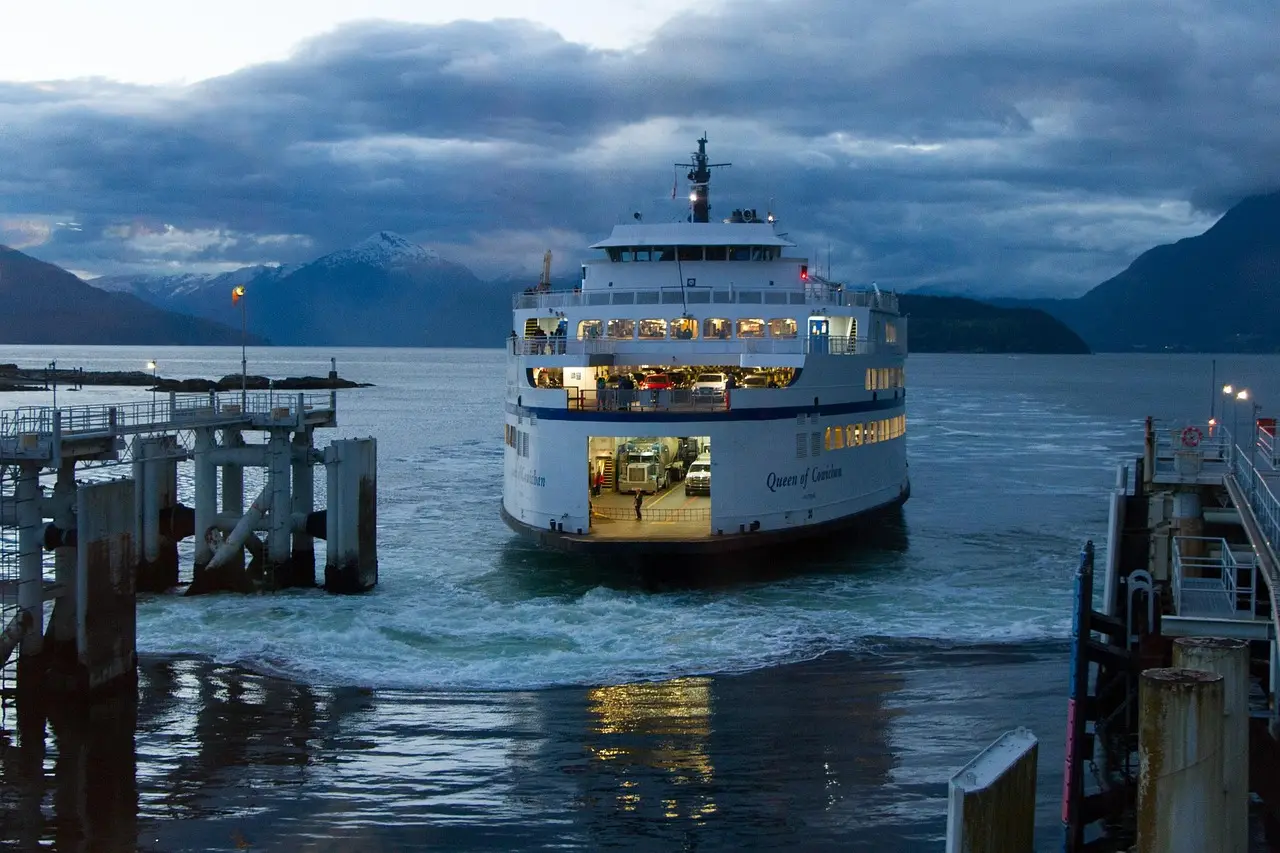
Every 35 minutes, a massive ferry pulls into Winslow’s harbor, disgorging hundreds of passengers and dozens of cars onto Bainbridge Island while loading up island residents bound for Seattle. The Winslow Ferry Terminal serves as the vital link between island and city, carrying 4.9 million passengers annually on what has become the busiest route in the Washington State Ferry system. Yet this modern transportation hub represents far more than efficient transit, it embodies the unique character of island life and the daily rhythm that has shaped Bainbridge Island’s identity for over a century.
Connecting Two Worlds
The ferry connection between Bainbridge Island and Seattle represents one of the most scenic and functionally important transportation links in the Pacific Northwest. The 35-minute journey across Elliott Bay and Puget Sound provides not just transportation but a daily transition between the urban energy of Seattle and the quieter pace of island life.
For thousands of daily commuters, the ferry ride serves as a moving meditation, a forced pause between the demands of city work and the refuge of island home. Passengers use the time to read, work, socialize, or simply watch the water, creating a unique commuter experience that transforms the necessity of travel into an opportunity for reflection and connection.
The route’s popularity extends far beyond practical transportation. Tourists consider the ferry ride one of Seattle’s premier attractions, offering unparalleled views of the Seattle skyline, Mount Rainier, the Olympic Mountains, and occasional wildlife sightings including orcas, seals, and diverse seabirds that make Puget Sound their home.
Engineering Marvel
The ferries serving the Seattle-Bainbridge Island route represent impressive examples of maritime engineering adapted to the specific challenges of Puget Sound navigation. The current vessels, Tacoma and Wenatchee, are Jumbo Mark-II class ferries stretching over 400 feet in length and capable of carrying up to 200 cars and 2,500 passengers.
These floating bridges must navigate complex tidal currents, changing weather conditions, and heavy maritime traffic while maintaining precise schedules essential to the thousands of people who depend on reliable ferry service. The engineering challenges include designing vessels that can handle both calm summer conditions and winter storms while providing safe, comfortable passage for passengers and secure transport for vehicles.
The terminal infrastructure represents equally sophisticated engineering, with loading systems designed for rapid vehicle boarding and passenger flow while accommodating the extreme tidal variations that can change water levels by up to 14 feet between high and low tides.
Economic Lifeline
The ferry service functions as Bainbridge Island’s economic lifeline, enabling residents to maintain jobs in Seattle while living in a smaller, more rural community. This connection has fundamentally shaped the island’s development, creating a bedroom community that retains much of its small-town character while benefiting from proximity to major metropolitan employment centers.
The commuter base supports local businesses from coffee shops that serve early morning ferry riders to restaurants and retail stores that depend on both residents and day-trip visitors from Seattle. The ferry schedule shapes business hours, event planning, and daily life patterns throughout the island.
Beyond individual commuters, the ferry enables commercial connections that support island businesses. Everything from construction materials to grocery supplies arrives via ferry, while island businesses depend on ferry access to reach Seattle markets and customers.
Island Rhythm
Ferry schedules create the fundamental rhythm of island life, influencing everything from work schedules to social events to emergency services. Islanders learn to plan around ferry times, arriving early for important appointments and building extra time into travel plans to accommodate potential delays or missed sailings.
This transportation constraint, while sometimes frustrating, also contributes to the island’s distinct character. The necessity of planning ahead, the forced pause of ferry travel, and the shared experience of ferry commuting create community bonds and life patterns that distinguish island living from typical suburban experiences.
Late evening ferries bring home commuters and social travelers, while early morning sailings carry workers, students, and people with business in the city. Each sailing represents a micro-community of regular passengers who often recognize each other and share the daily experience of water commuting.
Gateway Experience
The Winslow Ferry Terminal serves as more than transportation infrastructure, it functions as the gateway experience that shapes visitors’ first impressions of Bainbridge Island. The approach by water reveals the island’s forested hills, waterfront homes, and small-town harbor in a dramatic way that arriving by bridge or highway could never match.
Walking off the ferry into downtown Winslow, visitors immediately experience the island’s pedestrian-friendly character. The terminal’s location just a few blocks from the main commercial district encourages exploration on foot and creates easy connections between ferry travel and local businesses, restaurants, and attractions.
This proximity between transportation and town center reflects careful community planning that prioritizes walkability and local business support over automobile convenience. The design encourages visitors to explore beyond their cars and experience the island’s character through walking, shopping, and dining in the downtown core.
Beyond its transportation function, the ferry terminal area serves as an informal community hub where islanders encounter neighbors, visitors meet locals, and the diverse population of island residents converges. The terminal’s waiting areas, parking lots, and nearby businesses create spaces for casual social interaction that strengthen community bonds.
The terminal also serves as the island’s primary connection point for emergency services, medical evacuations, and essential services that require mainland connections. This critical infrastructure role gives the ferry system importance far beyond routine transportation, making it essential for the island’s safety and wellbeing.
During emergencies or weather disruptions that interrupt ferry service, the terminal becomes a focal point for community information sharing and mutual support, demonstrating how transportation infrastructure functions as social infrastructure as well.
Environmental Considerations
Ferry service presents both environmental challenges and benefits compared to alternative transportation options. While the large diesel-powered vessels produce significant emissions, they also enable car-free living for some residents and reduce the traffic impacts that additional bridges or increased vehicle ferry capacity would create.
The ferry route provides opportunities for marine wildlife observation and education, helping passengers develop connections to Puget Sound’s marine environment. These connections often inspire environmental awareness and advocacy that benefits regional conservation efforts.
Washington State Ferries continues upgrading its fleet with more fuel-efficient vessels and exploring alternative fuel technologies that could reduce the environmental impact of ferry operations while maintaining the essential transportation links that island communities require.
Cultural Symbol
The Winslow Ferry Terminal has become a cultural symbol of Pacific Northwest life, representing the region’s unique geography, the integration of maritime transportation into daily life, and the possibility of maintaining small-town community within a major metropolitan area.
The ferry ride appears frequently in popular culture as a symbol of escape, transition, and the Pacific Northwest lifestyle. From romantic movie scenes to tourism advertisements, the Seattle-Bainbridge Island ferry represents the region’s distinctive character and quality of life.
For many residents, the daily ferry commute becomes a cherished part of their lifestyle rather than simply a transportation necessity. The forced slower pace, the water views, and the transition time between work and home create experiences that enrich daily life in ways that typical suburban commuting cannot match.
Future Challenges
The ferry terminal faces ongoing challenges as both Bainbridge Island and Seattle continue growing, creating increased demand for ferry service while straining terminal capacity and parking availability. Balancing increased ridership with terminal limitations requires creative solutions and ongoing infrastructure investment.
Climate change presents long-term challenges for ferry operations, with sea level rise, increased storm intensity, and changing weather patterns potentially affecting service reliability and terminal infrastructure. Adaptation planning must address these environmental challenges while maintaining essential transportation services.
The terminal’s role will continue evolving as transportation technology advances and community needs change. Future developments must balance efficiency improvements with preservation of the ferry experience’s unique character and its role in maintaining Bainbridge Island’s distinct island identity.
The Winslow Ferry Terminal represents far more than a transportation facility, it embodies the connections between place and community, urban and rural, work and home that define life in the Pacific Northwest. As both gateway and gathering place, the terminal facilitates not just movement between locations but transitions between different ways of living and being.
Every day, thousands of people pass through this portal between city and island, each carrying their own purposes and stories while participating in a shared experience that has defined Bainbridge Island life for generations. The terminal shows the power of transportation infrastructure to shape community character and enable ways of life that honor both economic necessity and quality of life aspirations.