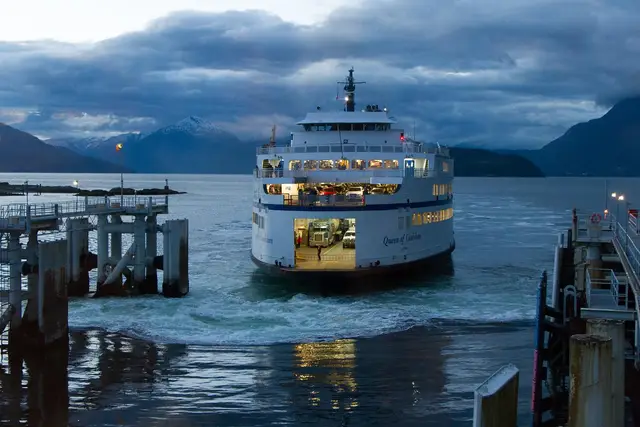
On the quiet shores of Eagle Harbor, where the ferry once carried Bainbridge Island residents to and from Seattle, stands a memorial that bears witness to one of the darkest chapters in American history. The Bainbridge Island Japanese American Exclusion Memorial marks the exact spot where, on March 30, 1942, 227 Japanese Americans, most of them United States citizens by birth, were forced to board a ferry under armed guard, beginning their journey to incarceration camps. The memorial’s motto, “Nidoto Nai Yoni” (Let It Not Happen Again), carries both grief and determination, honoring those who suffered while challenging future generations to protect the civil rights of all Americans.
The First Exclusion
Bainbridge Island holds the tragic distinction of being the first community targeted under Executive Order 9066, signed by President Franklin Roosevelt on February 19, 1942. Civilian Exclusion Order No. 1, posted on March 24, 1942, gave Japanese American residents just six days’ notice to report for “evacuation.” They could bring only what they could carry in their hands, forcing families to abandon homes, businesses, farms, and possessions accumulated over decades of hard work.
Why Bainbridge first? According to the Densho Encyclopedia, the island’s close proximity to U.S. Navy facilities — including the Bremerton Navy Yard across the water — prompted Lieutenant General John DeWitt to order the islanders’ removal on March 24, 1942, the same day he issued Civilian Exclusion Order No. 1. The postwar Commission on Wartime Relocation and Internment of Civilians later concluded that the incarceration program as a whole was driven not by military necessity but by “race prejudice, war hysteria, and a failure of political leadership.”
Of the 276 Japanese Americans who called Bainbridge Island home during the war years, 227 were removed that March morning. Others — including young people away at school or serving in the U.S. military — were barred from returning home. Families were torn apart, with some members held in camps while others remained free but unable to reunite with their loved ones.
The Japanese American community on Bainbridge Island had deep roots reaching back to the 1880s. Families operated successful strawberry farms, ran stores and other businesses, and contributed to the island’s economic and social life. Many were leaders in community organizations, their children excelled in local schools, and they had built strong relationships with their non-Japanese neighbors.
Japanese immigrants had been part of island life since the 1880s, when workers came to labor in the Port Blakely sawmill; by the 1920s and 1930s, island families had built thriving strawberry farms that became a mainstay of the local economy. These were not strangers or enemies — they were neighbors, friends, classmates, and fellow Americans.
The economic impact of their removal was immediate and lasting. The exclusion came just weeks before the strawberry harvest, leaving fields untended, businesses shuttered, and a hole in the island’s economy and community life.
From Manzanar to Minidoka
On that gray March morning, families gathered at the Eagledale ferry dock carrying suitcases, duffel bags, and the uncertainty of not knowing when, or if, they would return home. Children who had been born on Bainbridge Island and knew no other home were forced to leave the only community they had ever known.
The ferry carried them first to Seattle, then by train under armed guard to Manzanar in California’s Owens Valley — a desolate landscape of barbed wire, guard towers, and tar paper barracks. According to the Densho Encyclopedia, most of the Bainbridge Islanders remained at Manzanar for just under a year: in February 1943, 177 of them transferred to the Minidoka camp in Idaho, where the bulk of Seattle-area Japanese Americans were held, while a handful of families stayed in California. Most spent roughly three years in confinement before the West Coast exclusion was lifted.
In the camps, islanders endured extreme temperatures, inadequate housing, poor food, limited medical care, and the constant surveillance of armed guards. Children attended school in barracks, adults worked for wages far below prevailing standards, and everyone lived with the uncertainty of what would happen to them after the war.
What made Bainbridge Island unique was not just that it was first, but how some members of the broader community responded to their neighbors’ persecution. The Bainbridge Review, the local newspaper, courageously opposed the exclusion orders and published letters from internees, keeping their stories before the public when most media ignored or supported the incarceration.
Walt Woodward, the newspaper’s editor, wrote editorials defending the constitutional rights of Japanese Americans and criticizing the military’s action as unnecessary and unjust. His stance was dangerous, he faced threats, subscription cancellations, and social ostracism for defending his Japanese American neighbors when hysteria and racism dominated public discourse.
Some non-Japanese islanders stepped forward to protect their neighbors’ property, maintaining farms and businesses while their owners were imprisoned. These acts of courage and loyalty demonstrated that not all Americans accepted the government’s propaganda about the “Japanese threat” and that some were willing to risk their own welfare to do what was right.
The Long Return
When the war ended and the camps finally closed, more than half of the island’s prewar Japanese American community returned — an unusually high rate compared with many West Coast communities, according to the Densho Encyclopedia. Even so, many had lost property, businesses, and faith in American promises of justice and equality, and some chose to start over elsewhere rather than return to a place that held such painful memories.
Those who did return faced continued discrimination and the challenge of rebuilding lives that had been shattered by four years of incarceration. Property had been lost or damaged, businesses had failed, and the tight-knit community that had existed before the war could never be fully restored.
However, the returning families also found genuine welcome from neighbors who had opposed their removal and worked to help them rebuild. This combination of trauma and support, rejection and acceptance, would characterize the post-war experience of Japanese American communities throughout the West Coast.
Building a Memorial
The creation of the Exclusion Memorial represented a decades-long effort by survivors, their descendants, and community allies to ensure that this history would not be forgotten. In 2008, Congress designated the memorial as a unit of Minidoka National Historic Site, providing federal recognition of its historical significance.
The memorial’s story wall, designed by architect Johnpaul Jones and opened to the public on July 30, 2011, creates a powerful space for reflection and remembrance. The curving wall of old-growth red cedar, granite, and basalt bears the names of all 276 Japanese and Japanese American islanders exiled during the war, making each person visible and honored rather than reduced to a statistic. The path leads toward the site of the old Eagledale ferry dock where families were forced aboard, creating a physical connection to that traumatic moment.
Friezes along the wall chronicle the community’s story — from immigration and island life through exclusion and incarceration to the return home after the war. These artistic elements help visitors understand the full arc of this community’s experience while emphasizing that the exclusion was one chapter in a larger story of building American lives.
Lessons for Democracy
The Exclusion Memorial serves as more than a historical marker, it functions as a classroom for democracy, teaching visitors about the fragility of civil rights and the vigilance required to protect constitutional principles. The memorial’s educational mission emphasizes that what happened to Japanese Americans was not inevitable but resulted from specific choices made by government officials and ordinary citizens.
School groups, community organizations, and individual visitors use the memorial to explore questions that remain relevant today: How do we balance security concerns with civil liberties? What is our responsibility when we see our neighbors being targeted? How do we resist fear-based policies that violate American principles?
The memorial’s motto, “Nidoto Nai Yoni” (Let It Not Happen Again), challenges visitors to actively work for justice rather than simply remember past injustices. This forward-looking message recognizes that protecting democracy requires ongoing effort from each generation.
Modern Relevance
The memorial’s importance has only grown as contemporary debates about immigration, national security, and civil rights echo themes from the World War II era. Visitors find disturbing parallels between the rhetoric used to justify Japanese American incarceration and language used today to target other minority communities.
The memorial provides historical context for understanding how constitutional protections can be abandoned during times of crisis and how fear can be manipulated to turn Americans against their neighbors. These lessons remain urgently relevant as the United States continues grappling with how to balance security concerns with civil liberties.
Annual Day of Remembrance ceremonies on March 30th bring together survivors, community members, and visitors to honor those who were incarcerated while recommitting to vigilance in protecting the rights of all Americans. These gatherings connect historical memory to contemporary action, ensuring that the memorial serves not just as monument but as inspiration for ongoing justice work.
A Sacred Trust
The Exclusion Memorial represents a sacred trust between those who experienced this injustice and those who inherit the responsibility to prevent its repetition. For survivors and their families, the memorial provides recognition of their suffering and validation of their American identity that was questioned during the war years.
For the broader community, the memorial offers an opportunity to confront difficult history honestly while demonstrating that Americans can learn from their mistakes and build more inclusive communities. The memorial’s existence on Bainbridge Island, where the exclusion began, shows that communities can face their past and choose to do better.
As visitors stand where 227 people were forced to leave their homes under armed guard, they witness the exact spot where American democracy failed its own principles. Yet the memorial itself, created through community effort, federal recognition, and ongoing education programs, demonstrates democracy’s capacity for self-correction when citizens demand accountability and justice.
The memorial’s ultimate message is both sobering and hopeful: injustice happened here, but so did resistance, recovery, and renewal. “Nidoto Nai Yoni”, Let It Not Happen Again, remains both a prayer and a promise, calling each visitor to active citizenship in defense of the constitutional principles that make America’s highest ideals possible.