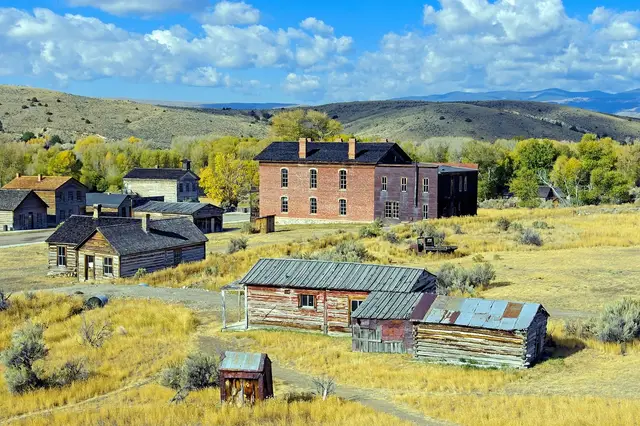
Nestled in the rugged mountains of southwestern Montana, Virginia City stands as one of America’s most authentic and well-preserved Wild West towns. This National Historic Landmark, which served as Montana’s territorial capital from 1865 to 1875, offers visitors an unparalleled journey back to the gold rush era when fortunes were made and lost overnight in the dusty streets of mining boom towns.
The Alder Gulch Gold Discovery
Virginia City’s explosive growth began on May 26, 1863, when a prospecting party that included Bill Fairweather discovered gold in Alder Gulch. Within days of the strike, word spread throughout the mining camps of the region, triggering one of the most spectacular gold rushes in American history. Thousands of miners descended on the 14-mile gulch within months — the Montana Historical Society estimates the area held some 30,000 people by 1864 — creating a string of camps that, by the estimate cited in Virginia City’s official preservation history, ultimately produced roughly $100 million in gold in period dollars, about $30 million of it dug out in the first three years alone.
The richness of Alder Gulch’s placers exceeded even the most optimistic expectations. Unlike many western gold strikes that quickly played out, the gulch continued producing substantial quantities of gold for decades. This sustained productivity attracted not only miners but also the merchants, professionals, and service providers who transformed Virginia City from a rough mining camp into a sophisticated frontier metropolis.
The discovery’s timing proved crucial for Montana’s development. The Civil War had disrupted traditional economic patterns throughout the nation, and the western territories desperately needed new sources of wealth to fund territorial governments and infrastructure development. Virginia City’s gold provided the economic foundation that would support Montana’s territorial organization and eventual statehood.
Territorial Capital and Government
In 1865, Montana’s territorial government relocated from Bannack to Virginia City, recognizing the new town’s superior size, wealth, and strategic location. As territorial capital, Virginia City became the political center of a vast region that extended from the Continental Divide to the Yellowstone River and from the Canadian border to the Wyoming Territory.
The territorial legislature met in Virginia City’s buildings, passing laws that would govern Montana’s development for decades. Virginia City’s prominence attracted ambitious politicians, lawyers, and businessmen who would shape Montana’s transition from territory to statehood.
The presence of territorial government brought stability and legitimacy to what had been a chaotic frontier region. Courts established legal precedents for mining claims, property rights, and civil disputes that had previously been settled through vigilante action or personal violence. The territorial government’s presence also attracted federal investment in infrastructure and services that benefited the entire region.
Vigilante Justice and Law Enforcement
Virginia City’s early years were marked by the same lawlessness that plagued many mining boom towns, but the community’s response became legendary in the annals of frontier justice. The activities of road agents led by Henry Plummer, who operated between Virginia City and Bannack, were blamed for a reign of terror said to have claimed over 100 victims during 1863 and 1864, though that figure traces to vigilante chronicler Thomas Dimsdale and is disputed by modern historians.
The formation of the Montana Vigilantes in December 1863 represented one of the most dramatic episodes in American frontier history. Led by prominent citizens including Paris Pfouts and Wilbur Sanders, the vigilantes organized secret trials and executions. Between December 1863 and February 1864, they hanged an estimated 21 men they accused of belonging to the road agent gang — among them Sheriff Henry Plummer, hanged at nearby Bannack in January 1864.
The hangings themselves are well documented; how justified they were is another matter. The Montana Historical Society notes an ongoing debate among historians: traditionalists hold that the vigilantes acted against genuine criminals in the absence of working courts, while revisionists argue the evidence against some victims — Plummer included — was thin, and that the vigilantes may have used their power against personal and political enemies. The famous numbers “3-7-77,” now worn on Montana Highway Patrol shoulder patches, are popularly linked to these vigilantes, but that connection is lore: the symbol is first documented years later, and even its meaning remains a mystery.
Commercial and Cultural Development
At its peak in the mid-1860s, Virginia City was among the liveliest commercial centers in the northern Rockies. The town’s main street bustled with activity as miners, merchants, and visitors conducted business in establishments that ranged from simple saloons to hotels that aspired to eastern standards of comfort.
Virginia City’s businesses reflected the diverse needs and desires of a prosperous mining community. Banks handled gold transactions and provided credit for mining operations. General stores stocked everything from mining equipment to luxury goods imported from distant markets. Restaurants served cuisine from around the world, while hotels accommodated the constant stream of visitors drawn by business opportunities or simple curiosity about frontier life.
The town’s cultural institutions demonstrated residents’ determination to maintain civilized standards despite the frontier setting. Schools educated children while churches offered spiritual guidance and social organization. The Montana Post, founded in Virginia City in 1864 as the territory’s first newspaper, kept residents informed about local, national, and international events and became an influential voice in territorial affairs.
Economic Diversity and Decline
Virginia City’s prosperity extended beyond gold mining to include a diverse economy that served the broader region’s needs. Freight companies transported goods throughout Montana Territory, while stage lines connected Virginia City to distant cities and provided passenger service for travelers. The town’s merchants supplied mining camps throughout the territory, making Virginia City a regional commercial center.
However, the town’s fortunes remained tied to gold production, and as the richest placers played out, Virginia City’s population began to decline — the Montana Historical Society records it collapsing to a few hundred people by the early 1870s. The territorial capital was moved to Helena in 1875, ending Virginia City’s role as Montana’s political center, and when railroads later crossed the territory, their routes bypassed the old gold camp entirely.
By 1880, Virginia City’s population had dwindled from thousands to hundreds as businesses closed and residents relocated to more promising opportunities. However, the town never completely died, and enough residents remained to maintain essential services and preserve many of the original buildings.
Historic Preservation and Tourism
Virginia City’s remarkable preservation began with the recognition that the town represented an irreplaceable historical resource. According to the Montana Historical Society, Charles and Sue Bovey of Great Falls were among the first to recognize the town’s significance, and in the early 1940s they began purchasing and stabilizing its fragile historic buildings while developing tourism programs that would support the town’s economy and preserve its authentic character.
The Boveys’ preservation efforts emphasized historical accuracy and authenticity, using period materials and techniques whenever possible. They collected thousands of artifacts from the territorial period and furnished buildings with period items that recreated the appearance of Virginia City during its boom years. Their work established Virginia City as one of America’s premier historical attractions.
In 1961, Virginia City was designated a National Historic Landmark — among the first in Montana, according to the Montana Heritage Commission — recognizing its exceptional significance for understanding the American frontier experience and lending national recognition to local preservation efforts.
Living History Programs
Today, Virginia City operates as a living history museum where costumed interpreters recreate daily life during the territorial period. Visitors can experience everything from gold panning and blacksmithing to theatrical performances and old-fashioned medicine shows that bring the frontier era to life.
The town’s historic buildings house operating businesses that use period techniques and equipment to demonstrate frontier crafts and services. The Virginia City Players perform melodramas and historical plays in the historic Opera House, while the Virginia City Train carries passengers on vintage narrow-gauge railroad equipment.
Educational programs serve thousands of school children annually, providing hands-on learning experiences about frontier life, territorial government, and the social dynamics of mining boom towns. These programs help visitors understand both the opportunities and challenges that characterized life on the mining frontier.
Contemporary Preservation Challenges
Maintaining Virginia City’s authentic character while accommodating modern visitors requires careful balance between preservation and practical needs. The harsh Montana climate, aging building materials, and increasing visitation create ongoing challenges for preservationists who work to maintain historical accuracy while ensuring visitor safety and comfort.
In 1997, the Montana Legislature approved the state’s purchase of a large portion of Virginia City, all of neighboring Nevada City, and thousands of artifacts from the Bovey family, placing them in the care of the Montana Heritage Commission. The commission continues the preservation tradition established by the Boveys while adapting to contemporary standards for museum interpretation and visitor services, ensuring that Virginia City will keep serving as a window into the American frontier experience for future generations.
Virginia City shows the dreams and determination of the thousands of people who sought their fortunes in Montana’s goldfields and to the preservation efforts that ensure their stories remain accessible to visitors from around the world.