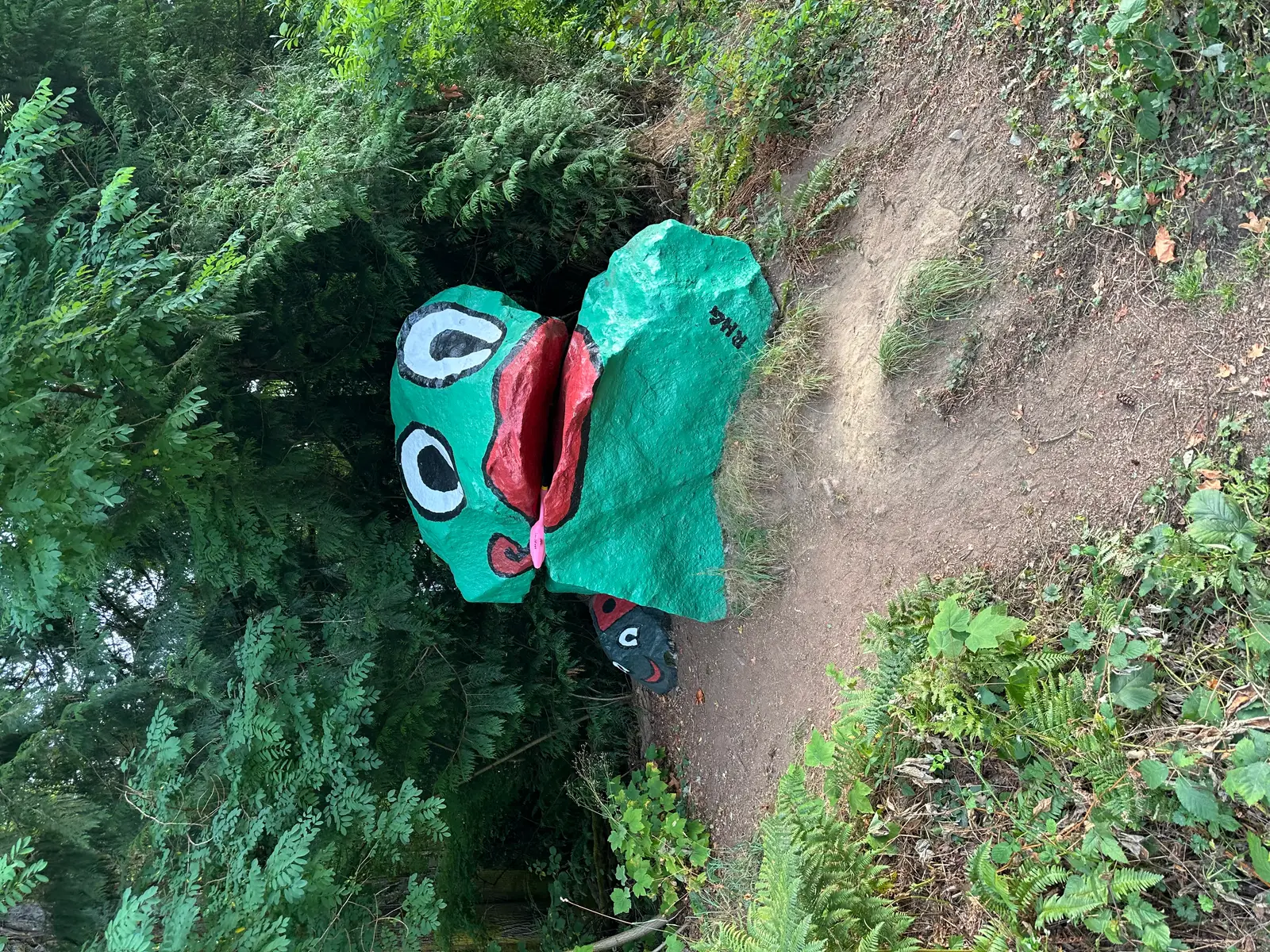
Frog Rock stands as one of Bainbridge Island’s most cherished landmarks, embodying the island’s creative spirit and community connections. This painted boulder formation at the intersection of Phelps Road and North Madison Avenue tells a remarkable story of how teenage creativity can evolve into a generational tradition.
The Making of an Icon (1940s-1971)
Originally a large granite glacial erratic left by ancient glaciers, the boulder was dynamited around 1940 for development purposes. Instead of shattering, it split cleanly in half. In the 1950s, a workman stacked one half atop the other, creating the distinctive formation known as “Split Rock.”
The transformation occurred on June 6, 1971, when high school graduates Robert Green and Ellen Barnes painted the stacked rocks to resemble a frog during “Paint Night” - a beloved local graduation tradition. Working by car headlights and flashlights in the middle of the night, they created what would become Frog Rock. About a year later, around 1972, the couple returned to paint a smaller companion rock as a ladybug.
Community Symbol and Tradition
Frog Rock has become integral to island life, serving as:
- A navigation landmark and cyclist meeting point
- A photography destination for tourists and locals
- A canvas for seasonal decorations (Halloween costumes, Christmas gear, pandemic masks)
- The inspiration for community art projects, including 36 fiberglass frogs auctioned in 2011
- A parade float favorite and local merchandise icon
Cultural Legacy
The Dahl family, current property owners, maintains the rock with community help, while Bob and Ellen Green continue touching up their creation decades later. Frog Rock demonstrates how grassroots public art can create lasting community identity, representing the island’s values of creativity, whimsy, and intergenerational connection.
This simple act of teenage expression has become a symbol of Bainbridge Island’s unique character - a place where community spirit and artistic creativity flourish together.